
Prefab container houses are now used in far more than temporary construction camps. From modular houses and site offices to workforce accommodation and commercial buildings, these modular constructions are being installed in a wide range of climates worldwide.
However, one challenge remains the same in almost every project: temperature control. Because steel conducts heat quickly, a container building without proper thermal insulation can become uncomfortable in extreme weather, especially in hot regions such as Africa, the Middle East, and Southeast Asia. This is why choosing the right insulation solution is one of the most important steps in modern container house design.

How to Choose the Right Container House Insulation System
A high-quality insulation system helps create a more stable and energy-efficient indoor environment while also improving long-term building performance. In addition to reducing heat transfer, insulated wall and roof panels can help minimize noise, control condensation, and protect the steel structure from moisture-related damage.
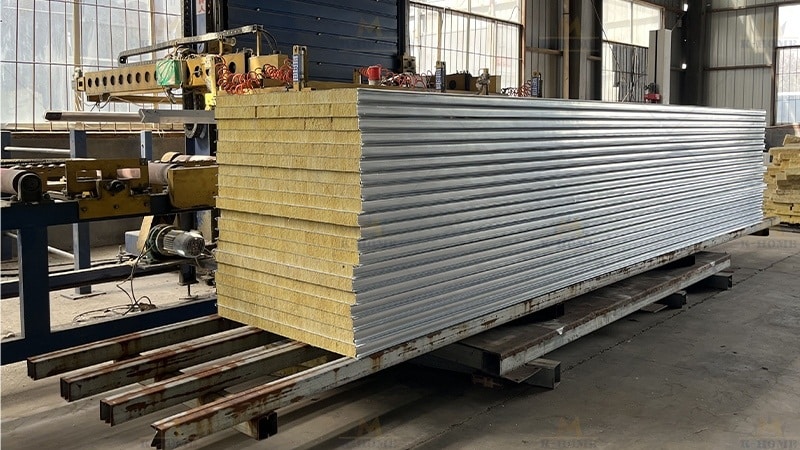
Today, sandwich panels are among the most widely used solutions for container house insulation, with core materials such as rock wool, polyurethane (PU), EPS, and glass wool offering distinct advantages in thermal efficiency, fire resistance, and project cost. Depending on the climate and application requirements, 50mm, 75mm, or 100mm insulated panels are commonly selected to achieve the ideal balance between comfort, durability, and budget.
Rock Wool Sandwich Panel
Rock wool sandwich panels are a top reliable choice for container house insulation, with robust fire protection and stable thermal performance. Made from natural basalt stone, the insulation core is processed into dense mineral fibers that help reduce heat transfer while maintaining a comfortable indoor environment in different climate conditions. Because the material is non-combustible, rock wool panels are widely used in modular offices, labor camps, mining accommodation, and other prefab buildings with strict fire safety requirements.
Besides improving thermal insulation for container homes, rock wool panels also provide excellent sound absorption, helping reduce outside noise in working and living spaces. Although the material is heavier than some other insulated panel options, it remains a preferred choice for long-term modular construction projects where safety and durability are important. For better insulation performance in container houses, 75mm and 100mm panel thicknesses are commonly recommended.
PU (Polyurethane) Sandwich Panel
PU sandwich panels are widely regarded as one of the highest-performing materials used in container house insulation systems. The rigid closed-cell foam core helps minimize heat transfer, making PU panels especially effective for modular buildings located in hot climates or areas with large temperature differences. Low thermal conductivity helps maintain stable indoor temperatures in container houses, reducing energy use for air conditioning and cooling systems.
Another advantage of PU insulated panels is their lightweight structure and strong resistance to moisture absorption. This makes them suitable for humid regions where long-term insulation stability is important. Because of their superior thermal efficiency, PU panels are commonly used in residential container homes, prefab villas, commercial modular buildings, and other energy-saving construction projects. In most cases, 75mm to 100mm PU panels are recommended to achieve better insulation results and indoor comfort.
EPS (Expanded Polystyrene) Sandwich Panel
EPS sandwich panels are a cost-effective option for container house insulation, especially for temporary buildings and budget-focused modular construction projects. The lightweight EPS core makes the panels easy to transport, install, and maintain, helping reduce both construction time and overall project costs. Because of these advantages, EPS panels are widely used in site offices, worker accommodation, storage units, and standard prefab housing applications.
Although EPS insulation panels offer more moderate thermal performance compared with PU systems, they still provide practical heat insulation for container houses in mild climate regions. Their affordability continues to make them one of the most commonly used insulation materials in the prefab building industry. To improve energy efficiency and indoor temperature control, many projects choose 75mm or 100mm EPS sandwich panels.
Glass Wool Sandwich Panel
Glass wool sandwich panels offer a balanced combination of thermal insulation, fire resistance, and acoustic performance for container house insulation applications. Manufactured from fine glass fibers, these insulated panels are often used in modular classrooms, prefab offices, dormitories, and other container buildings where sound control and indoor comfort are important.
One of the key benefits of glass wool insulation is its ability to reduce noise while also improving thermal efficiency inside container structures. The material is non-combustible, making it suitable for modular construction projects with higher safety standards. With proper sealing and installation, glass wool panels can provide stable, long-term insulation performance at a competitive cost. For better thermal insulation in container homes and prefab buildings, panel thicknesses of 75mm or above are typically recommended.
 Rock wool sandwich panel
-
PU sandwich panel
-
EPS sandwich panel
-
Glass wool sandwich panel


|
Material |
Thermal |
Fire Resistance |
Cost Level |
Weight |
Water Resistance |
Key Advantages |
Main Limitations |
|---|---|---|---|---|---|---|---|
|
Rock Wool |
0.035–0.040 |
Excellent (A) |
Medium |
Heavy |
Medium |
Fireproof, sound insulation |
Heavy, |
|
PU |
0.018–0.023 |
Moderate (B1/B2) |
High |
Light |
Excellent |
Best insulation, waterproof |
Higher cost, |
|
EPS |
0.038–0.041 |
Low (B2/B3) |
Low |
Very Light |
Moderate |
Low cost, easy installation |
Combustible, |
|
Glass Wool |
0.030–0.040 |
Excellent (A) |
Medium |
Light |
Medium |
Soundproof, fire-resistant |
Fiber handling, |
How Panel Thickness Influences Container House Insulation Performance
The insulation performance of a container house depends heavily on the depth of wall and roof insulation. In most modular container house projects, panel thickness is selected based on climate conditions and energy efficiency goals rather than a one-size-fits-all standard.
A 50mm solution is typically used for temporary structures or mild environments where basic thermal control is sufficient. For standard residential units, site offices, and commercial modules, 75mm panels are commonly chosen as they provide a balanced level of comfort and efficiency. In harsher climates or energy-sensitive projects, 100mm panels are often applied to significantly reduce heat transfer and improve long-term indoor stability.
Installation Quality Determines Real Container House Insulation Performance
Material selection is only the starting point in modular construction; installation quality is what ultimately makes or breaks a container unit’s thermal performance, as the installation process directly impacts insulation efficiency. Most sandwich panels are fitted with a tongue-and-groove connection system; this design ensures tight joints, boosts structural stability, and lays the groundwork for reliable insulation.
Workers secure the panels to the steel frame using self-drilling screws, and all joints need to be sealed with silicone or polyurethane sealants to keep air leakage at bay.
Beyond wall installation, roofing requires equal care: panels should be installed with a slight slope to ensure proper drainage, and all overlaps must be sealed with waterproof materials. Flooring is no exception; insulation layers are usually combined with structural boards like MGO or cement boards, creating a complete, durable system that supports long-term thermal performance.
Ultimately, achieving optimal insulation comes down to three key details: airtightness, moisture control, and thorough joint reinforcement. Cutting corners on any of these will undermine the overall thermal efficiency of your container unit.
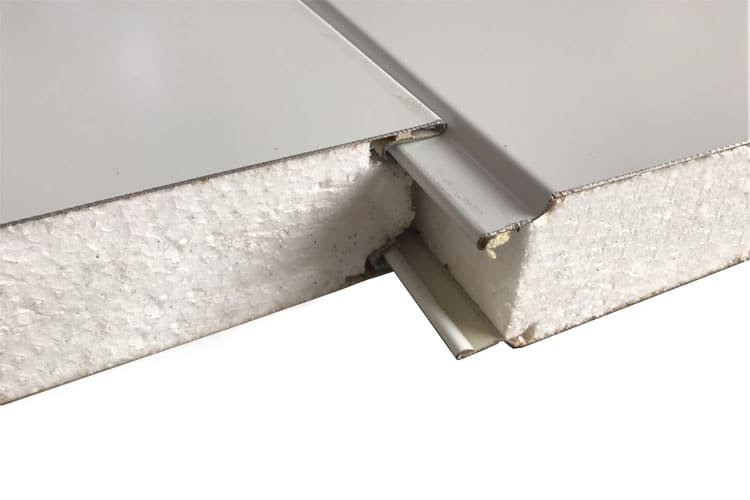 Insulated Panel Joint with Tongue-and-Groove for Container Houses
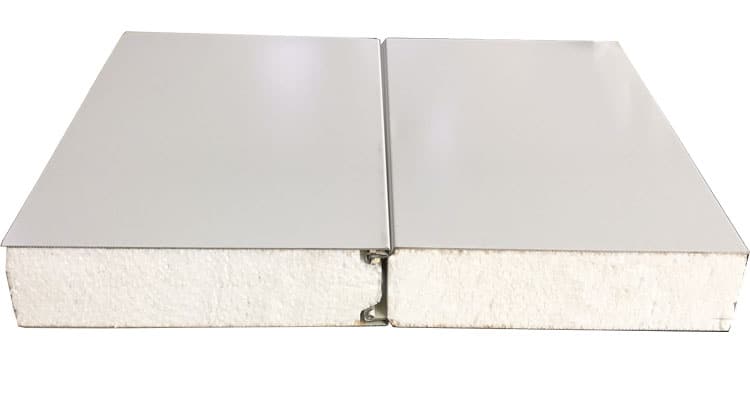 Insulated Container House Wall Panel Connection


Choosing the Right Insulation Material for Container House Projects
Looking at practical applications, the selection of insulation material depends largely on project requirements. PU panels are ideal for hot climates due to their superior thermal efficiency, while rock wool and glass wool are better suited for projects with strict fire safety standards. EPS panels remain a strong choice for low-cost and temporary housing, offering acceptable performance at a lower price point. Each material has its own role, and the right choice comes from balancing performance, safety, and budget.
As the container housing industry continues to develop, insulation materials are also evolving. Improvements in PU technology are addressing fire resistance concerns, while hybrid insulation panels are emerging to combine the strengths of multiple materials. With increasing global demand for energy-efficient and sustainable buildings, insulation will remain a key factor in future container house design.
In conclusion, choosing the right insulation material for a container house is a strategic decision that directly impacts comfort, safety, and long-term operating costs. By understanding the characteristics of rock wool, PU, EPS, and glass wool sandwich panels, and selecting the appropriate thickness and installation method, it is possible to create container houses that perform efficiently in any environment.
How to get the design for your project?
Please share the geographical environment and personnel capacity of your project, and our sales team will contact you within 24 hours.


contact us
Call us now
+86 373 2511966
Adress
Xiaodian Industrial Park, Xinxiang City, Henan Province, China
Websites
Request a Quote
For a quick quote, please fill out the Inquiry Form. Our sales team will contact you as soon as possible.