
Steel structure buildings are widely used in industrial, commercial, and public buildings. According to different uses and structural forms, they can be divided into several types. Common options include steel frame structures for high-rise buildings, steel truss structures for large-span roofs, and composite steel-concrete structures.
Among these structural systems, portal steel structure solutions are one of the most practical choices. They are often used for warehouses, workshops, commercial storage buildings, exhibition halls, and other large open spaces.
A portal steel structure has a simple form. It looks like a door frame and is usually made of two steel columns and one roof beam. These main members form a stable load-bearing system. With roof bracing, wall bracing, and purlins, the whole building becomes stronger and more reliable.
Common Types of Portal Steel Structure Solutions
Portal steel structures can be designed in various ways depending on the building’s use. The following three types are commonly used in industrial and commercial projects.
Standard Portal Frame Structure
This type is suitable for buildings without cranes. It is often used for warehouses, industrial sheds, and exhibition halls. Standard H-section steel beams and columns are commonly used. The structure is simple, easy to produce, and quick to install.
Crane-Supported Steel Structure
This type is designed for factories and workshops with lifting equipment. Because the crane creates extra loads during operation, the columns and foundations must be stronger. The connection between the columns and the foundation also needs to be more stable.
Partial Two-Story Steel Structure
This type is used when a workshop needs offices, equipment rooms, or control rooms inside the building. A small mezzanine floor can be added to part of the space. This design keeps the ground floor open while improving the use of indoor space.
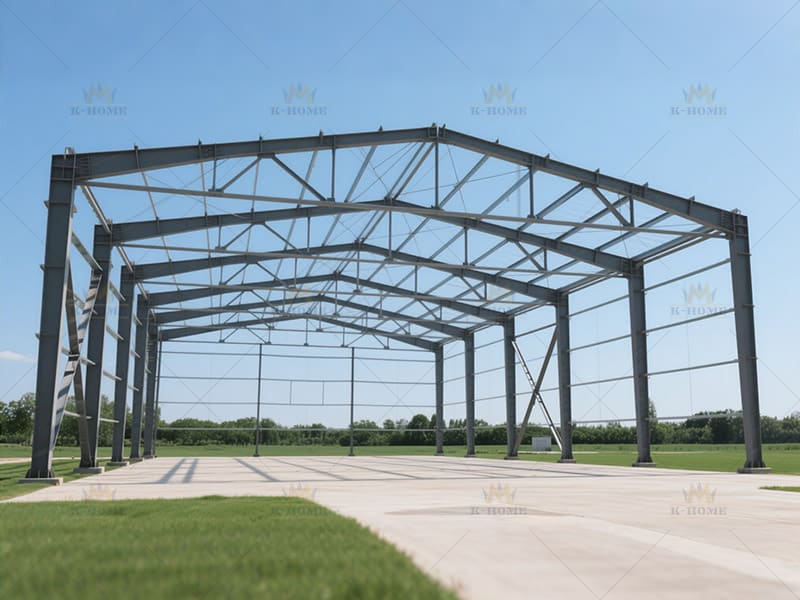 Standard Portal Steel Structure
 Crane-Supported Steel Structure
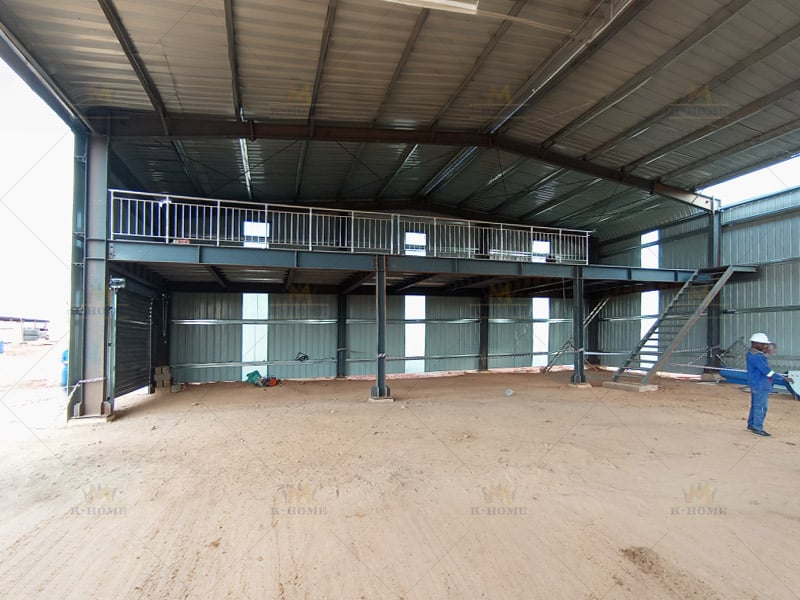 Partial Two-story Type Steel Structure


Main Advantages of Portal Steel Structure Solutions
Compared with other building systems, portal steel structures offer three practical advantages.
First, the steel components are easy to standardize. Main parts such as beams, columns, purlins, and bracing members can be prefabricated in the factory. This helps keep product quality stable and makes on-site installation more efficient.
Second, portal steel structure solutions are lightweight. In many projects, their weight is only about one-third to one-fifth of a concrete structure. This can reduce the load on the foundation, lower foundation costs, and cut down on excavation work.
Third, portal steel buildings provide a large, clear-span space. A common span can reach about 30 meters. With a special structural design, it can even exceed 60 meters. Since fewer or no interior columns are needed, the indoor space can be used more flexibly for equipment, storage, production, or vehicle movement.
Steel Structure Design Process for Portal Frame Buildings
A good steel structure design should be safe, practical, and suitable for the project site. Before production starts, engineers need to check the building use, local climate, wind conditions, snow load, seismic requirements, and foundation situation.
The design must also meet local building codes and safety standards. These requirements decide the size of steel members, the connection method, and the overall structural layout.
Choose the Right Steel Structure Type
The first step is to choose a suitable structure type. For a standard warehouse with a width of around 20 meters, a regular portal frame is usually enough.
For factories wider than 30 meters, or for workshops with cranes, a stronger portal frame system may be needed. If the building is long, expansion joints may also be added. This helps reduce deformation caused by temperature changes.


Calculate Loads for Steel Building Safety
Load calculation is a key part of structural design. Engineers need to calculate dead loads, live loads, wind loads, snow loads, and seismic loads.
Dead loads usually come from the roof, wall panels, steel members, and other fixed materials. Live loads may come from workers, equipment, snow, or maintenance activity. These load values directly affect the safety and stability of the steel building.
Select Suitable Structural Steel Materials
All structural steel materials should meet project standards and pass quality inspection before use. The right material should be selected according to the building type and local environment.
For example, buildings in coastal areas need better corrosion protection. Steel members may require stronger coatings or anti-corrosion treatment. Bolts, welding rods, and other connection materials should also match the selected steel grade.
Design Reliable Steel Structure Connections
Connection design is very important in steel structure engineering. The main connection points include beam-to-column joints and column-to-foundation joints.
These joints must be strong enough to transfer loads safely. They should also be easy to install on-site. A good connection design can improve structural safety and reduce construction problems.
 Steel Structure Design
 High-strength Bolt Components for Steel Structures


Improve Durability and Fire Protection
Steel needs proper protection to prevent rust. Before painting, the steel surface is usually cleaned and derusted. Then, anti-corrosion paint is applied to improve durability.
Steel structures also need fire protection. Under high temperatures, steel can lose strength. Fire-retardant coatings help the structure remain stable for a longer time during a fire. This gives people more time to evacuate safely.
If your project does not have drawings yet, K-HOME can help you develop a practical steel structure solution. Our sales and design team can provide layout support, structural suggestions, and a project quotation based on your building needs.
Applications of Steel Structure Solutions
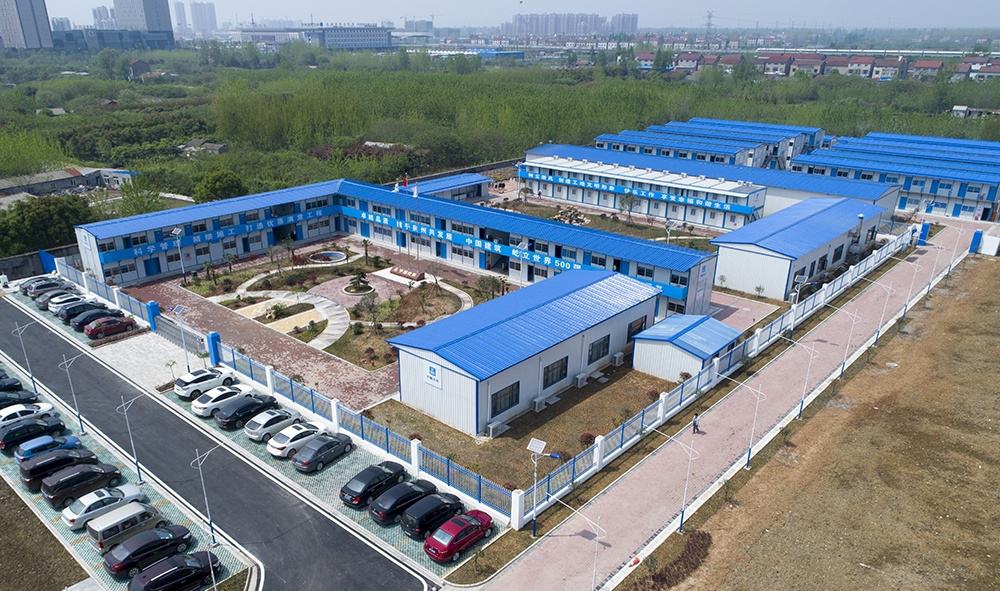
Steel structure solutions are mainly used in projects that require open space, quick installation, and flexible layout. They are commonly seen in factory buildings, warehouses, logistics centers, and agricultural facilities.


Installation Process for Steel Structure Buildings
Steel structure installation needs a clear sequence before work starts. In most steel building projects, installation includes preparation, foundation inspection, component hoisting, connection and alignment, anti-corrosion treatment, fire protection, and final acceptance.
- Preparation Before Installation
Review the construction drawings before installation. Arrange the installation sequence and confirm which steel components should be installed first. Check all parts for quantity, size, surface condition, and possible damage. Prepare cranes, welding machines, lifting tools, and safety equipment. Crane operators and welders should hold the required certificates. - Foundation Inspection and Component Hoisting
After the foundation is completed, check its strength and the accuracy of embedded parts. Anchor bolt position and level should also be checked carefully. Hoist the steel components in the planned order. Columns are usually installed first, followed by beams. Inner parts are installed before outer parts to keep the structure stable. Then install purlins, bracing members, and small connecting parts. - Connection and Alignment
Steel beams and columns are usually connected with high-strength bolts. Clean the connection surfaces before tightening the bolts. Then tighten the bolts from the center outward. During alignment, adjust the structure step by step. Use measuring instruments to check column verticality, beam level, and frame position. - Anti-Corrosion and Fire Protection
After installation, clean welds, scratches, and damaged coating areas. Apply anti-corrosion paint to protect the steel from rust. If the project requires fire protection, apply a fire-retardant coating to help the structure perform better in a fire.


How to get the design for your project?
Please share the geographical environment and personnel capacity of your project, and our sales team will contact you within 24 hours.
contact us
Call us now
+86 373 2511966
Adress
Xiaodian Industrial Park, Xinxiang City, Henan Province, China
Websites
Request a Quote
For a quick quote, please fill out the Inquiry Form. Our sales team will contact you as soon as possible.