
Across the vast and fast-developing African continent, the demand for modern industrial and logistics infrastructure is growing quickly. From the busy ports of Mombasa and Durban to the mining areas of the Democratic Republic of the Congo, Africa needs more reliable prefabricated warehouse buildings. In West Africa, agricultural steel structure projects also require storage spaces that are durable, efficient, and quick to build.
A steel structure warehouse in Africa has become a practical choice for many industrial and logistics projects. It combines strength, flexibility, and cost efficiency. Compared with many traditional concrete buildings, a steel warehouse building is faster to install and easier to adapt to different project needs.
However, building a steel structure warehouse in Africa is not a one-size-fits-all process. The continent covers many climate zones, including humid coastal areas, desert regions, tropical rainforests, and high-altitude plateaus. Each environment brings different challenges. These factors should be considered during design, material selection, and construction.
Corrosion Protection for Steel Structure Warehouses in Africa
Corrosion is one of the main risks for steel structure warehouses in Africa, especially in humid and coastal regions. In coastal locations such as Maputo, Durban, Lagos, and Mombasa, the air often contains both moisture and salt. These conditions can speed up the oxidation of exposed steel.
In equatorial regions, long-term high humidity can also increase the risk of rust. If the steel frame is not properly protected, corrosion may affect the warehouse structure, service life, and later maintenance costs.
Material Selection for Steel Warehouse Buildings in Humid Areas
In these areas, standard painted steel is usually not enough. Galvanized steel is a more suitable corrosion-resistant material. Hot-dip galvanization coats the steel members with a layer of zinc. This zinc layer works as a protective barrier and helps reduce direct contact between steel and moisture.

Besides galvanization, a multi-layer anti-corrosion coating system is also recommended. For steel warehouse projects in Mozambique and similar coastal regions, epoxy primer and polyurethane topcoat can help extend the service life of the building. Stainless steel components are also often used for key fasteners and connections, because these parts are more likely to rust if they are not well protected.
 Hot Dip Galvanizing Process for Steel Structures
-
Steel Structure Anti-rust Anti-corrosion Coating


Design Details for Coastal Steel Warehouses in Africa
Corrosion control does not depend only on materials. The design of the warehouse also plays an important role. Proper ventilation helps reduce condensation on interior surfaces. Roof edges, wall joints, gutters, and exposed steel parts should be designed to avoid water retention.
In hot and humid areas such as the Congo and parts of West Africa, a double protection system is often a safer choice. This means using hot-dip galvanized steel frames together with an additional anti-corrosion coating. These two layers of protection can make the steel warehouse more suitable for long-term use in harsh weather conditions.
Foundation Design for Steel Warehouse Buildings in Africa
Soil conditions are very different across Africa. Some areas have clay soil that expands after heavy rain, while others have sandy soil, red soil, or soft ground with poor bearing capacity. For steel structure workshops in Africa, the foundation directly affects the safety and service life of the whole building.
If the foundation is not suitable for the site, the warehouse may face settlement, column misalignment, or structural problems during later use. For this reason, the foundation should be designed according to the real soil conditions on site, not only by using standard drawings.
Foundation Options for Steel Frame Structure
In regions with unstable soil or soft ground, traditional shallow foundations may not be suitable. For example, in steel warehouse projects in Pretoria, South Africa, engineers often need to carry out a soil survey before deciding the final foundation depth.
In some parts of West Africa, soil movement can be more complex after heavy rain or long dry seasons. In these cases, deeper foundations, pile foundations, or reinforced concrete footings may be considered. These foundation systems help distribute building loads more safely. Flexible expansion joints can also help the warehouse reduce cracking or alignment problems.

Soil Survey Before Steel Warehouse Construction in Africa
Before building any steel structure warehouse in Africa, a proper site analysis is necessary. This includes checking soil bearing capacity, soil composition, groundwater level, and possible ground movement. These results help engineers decide the correct foundation type and connection details.
Skipping soil analysis may seem to save money at the beginning, but it can create higher costs later. In some projects, foundation misalignment can affect steel column installation and require base plate adjustment on site. A properly designed foundation, often using reinforced concrete footings bolted to the steel columns, helps the warehouse carry heavy loads and remain stable during long-term operation.
Heat Control for Industrial Steel Warehouses in Africa
The African sun can be intense. Without proper design, the interior of a steel building can become very hot. This may affect workers and damage stored goods. For this reason, heat control is an important part of any successful industrial steel building in Africa.
This is especially important for warehouses used to store food, textiles, machinery, medicine, agricultural products, or temperature-sensitive goods.
|
Environmental Challenge |
Key Design & Material Solutions |
Regional Examples |
|---|---|---|
|
Corrosion (Humidity/Salt) |
Hot-dip galvanized steel, multi-layer epoxy coatings, |
Mombasa (Kenya), Lagos (Nigeria), |
|
Soil |
Hybrid pile-raft foundations, reinforced concrete footings, |
West Africa (Laterite), Gauteng (South Africa) |
|
Solar Gain / High Heat |
Insulated sandwich panels (Rockwool/PU), |
Sahara regions, Pretoria (SA), Congo |
|
Intense |
Sloped roofing (minimum 5°-10°), large-capacity gutters, |
Mozambique, Rift Valley (Kenya) |
Insulated Sandwich Panels for Steel Warehouse Buildings
Using bare steel sheeting is a common mistake in hot regions. Although it may reduce the initial cost, it can make the indoor temperature rise quickly. In countries such as Mozambique, where temperatures remain warm for much of the year, insulated panels are a better choice for many prefab steel warehouse buildings.
These sandwich panels usually consist of two steel sheets with a core material such as rock wool, polyurethane, or EPS. They create a thermal break between outdoor heat and the indoor space. For large steel warehouse buildings, insulated wall and roof panels can help maintain a more stable internal environment and reduce pressure on ventilation or cooling systems.
 PU Sandwich Panel
-
EPS Sandwich Panel
-
PU Sealed Rock Wool Sandwich Panel


Ventilation Design for Steel Structure Warehouses in Hot Regions
Besides insulation, airflow is also important. A steel structure building with a higher roof pitch can help hot air rise and move out of the building more easily. Ridge ventilators installed along the roofline allow warm air to escape, while wall louvers bring in cooler air and improve cross-ventilation.
For warehouses storing produce, pharmaceuticals, or other sensitive goods, passive ventilation alone may not be enough. In these cases, mechanical ventilation, temperature monitoring, or air-quality control systems may be needed. The final solution should depend on the storage requirements and local climate.


Wind and Rain Resistance for Steel Structure Warehouses in Africa
Some parts of Africa experience extreme weather, from cyclones along the coast of Mozambique to strong thunderstorms in the Rift Valley. Steel structure buildings in Africa must be designed to handle these wind and rain loads.
Wind load, roof drainage, wall cladding, and foundation connections should all be considered as one system. If one part is weak, the building may face leakage, panel loosening, or structural damage during extreme weather.
Wind Load Design for Steel Warehouse Frames
In cyclone-prone areas such as coastal Mozambique, structural calculations must follow local wind load requirements. Engineers may increase the steel thickness of the main frames and use wind-resistant trusses, stronger bracing, and reinforced joints. The foundation may also need to be deeper to resist uplift forces during strong winds.
For steel warehouse buildings in high-wind regions, the roof and wall cladding should be fixed carefully. Screws, bolts, and connection plates need to be selected according to wind pressure. If the envelope system is weak, panels may loosen or lift during storms, even when the main frame remains stable.
Roof Drainage for Steel Warehouse Buildings in Rainy Areas
Heavy rainfall requires a reliable water management system. The roof of a steel structure warehouse should have a suitable slope, usually not less than 5° to 10°, to prevent water from pooling on the roof. Large-capacity gutters and downpipes are also needed in areas with heavy seasonal rain.
Waterproof details should not be ignored. Panel joints, roof screws, ridge caps, wall flashing, and gutter connections all need proper sealing. Poorly sealed roofs can lead to leaks, mold growth, and damage to stored goods such as textiles, electronics, and packaged products.


Cost and Logistics for Prefabricated Steel Warehouses in Africa
Building a prefabricated steel warehouse in Africa often involves more than structural design. Project owners also need to consider transportation, customs clearance, local installation capacity, permits, and site management. These factors can directly affect the project schedule and total cost.
For many African projects, prefabricated steel construction is practical because most components can be produced in a factory and shipped to the site. This helps reduce on-site work and makes the construction process easier to control.
Modular Construction for Steel Warehouse Projects
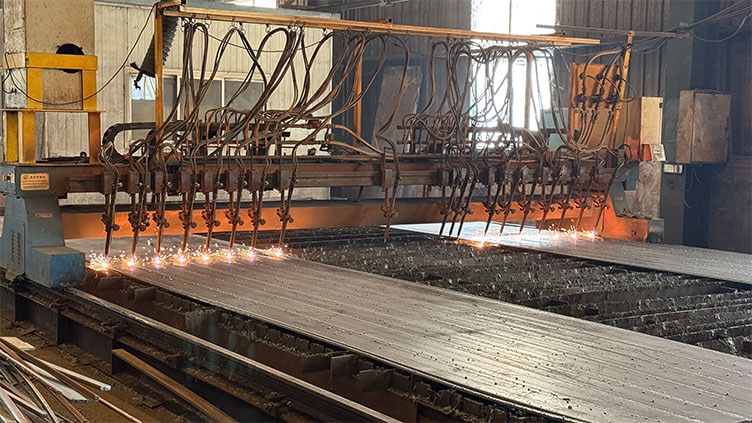
One of the main advantages of steel construction is modular production. Steel columns, beams, purlins, bracing systems, roof panels, and wall panels can be fabricated in a controlled factory environment and then shipped to the project site in containers. This approach helps improve quality control and reduce material waste.
For African warehouse projects, modular delivery can also reduce the risks caused by weather, material loss, and long on-site storage. When the materials arrive according to the installation schedule, the construction team can assemble the steel warehouse more efficiently.
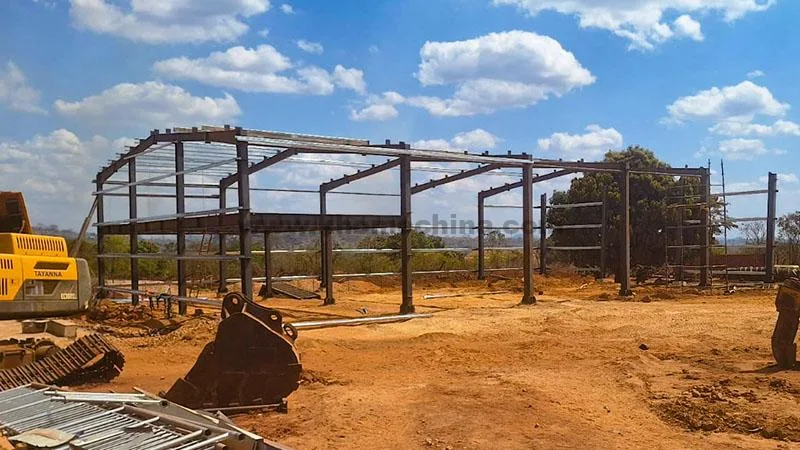
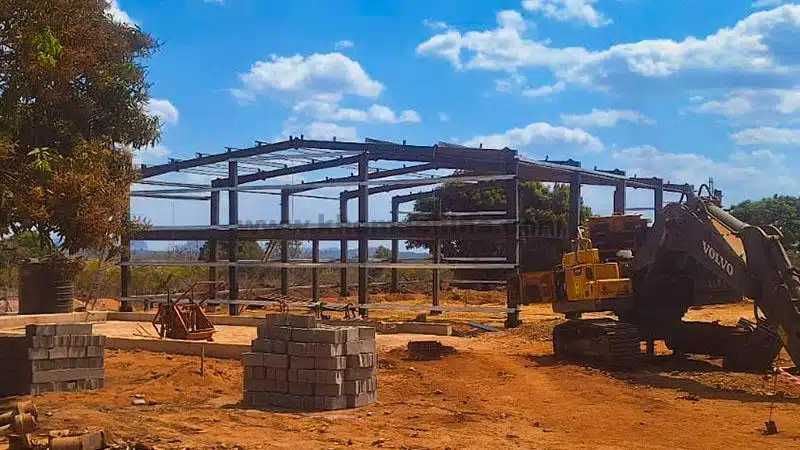
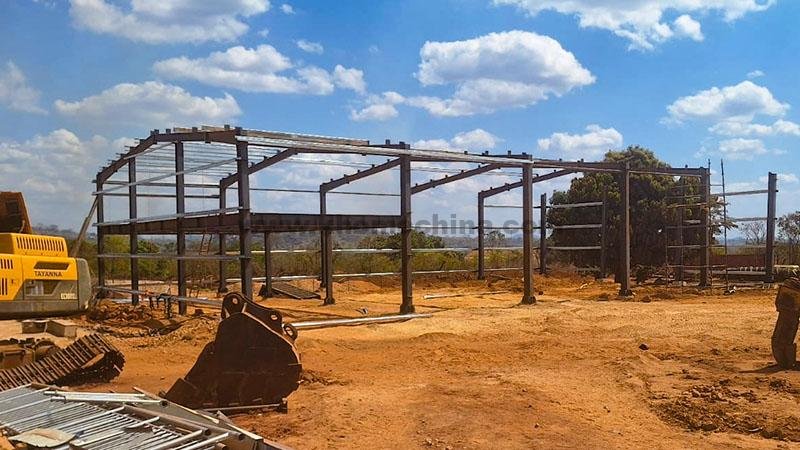 Prefabricated Steel Warehouse in Mozambique
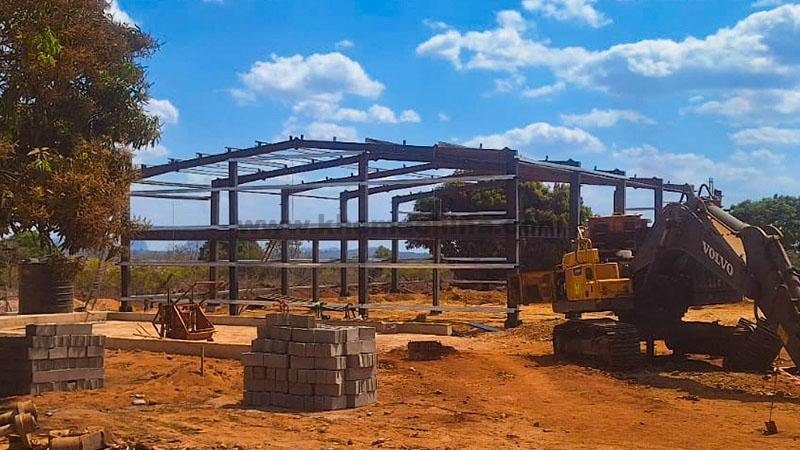 Prefabricated Steel Warehouse in Mozambique
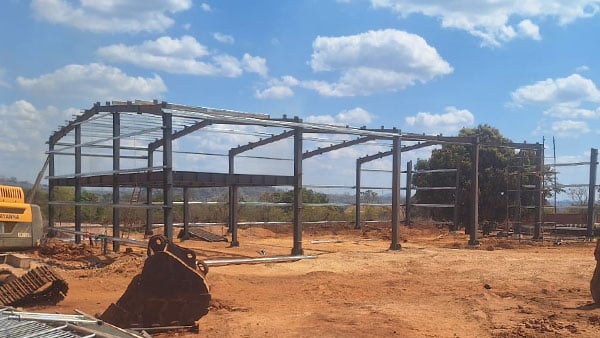 Prefabricated Steel Warehouse in Mozambique
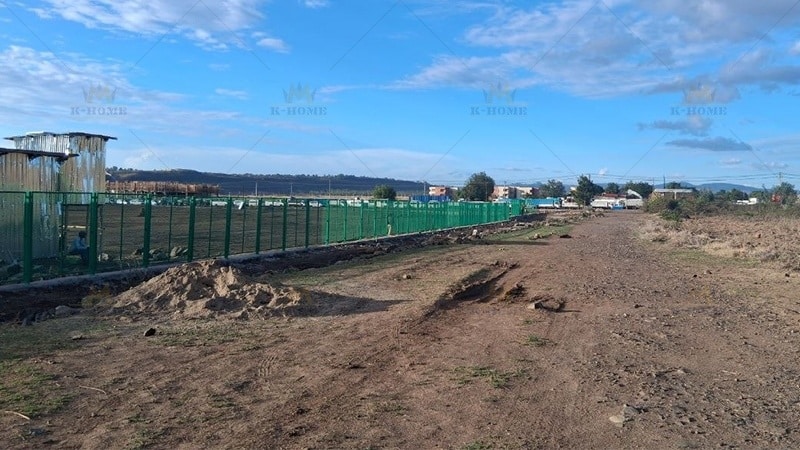
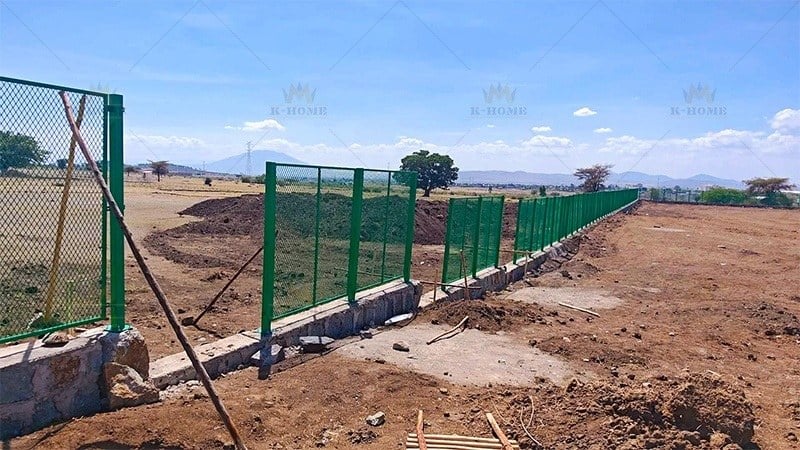 Steel Structure Projects in Ethiopia
 Steel Structure Projects in Ethiopia


Local Compliance for Steel Warehouse Construction
Successful initiatives frequently entail knowledge transfer. Professional training of local personnel in steel structure construction procedures not only improves community capacities but also assures long-term facility upkeep. Additionally, working with engineers who are knowledgeable with local construction requirements, such as the SANS 10400 building code in South Africa or unique zoning restrictions in Ghana, is critical. Engaging with local authorities early on can help to streamline the permitting process and prevent costly delays.
Building a Reliable Steel Structure Warehouse in Africa
Steel structure buildings in Africa are becoming an important option for industrial and logistics development. Its strength, fast construction, and flexible layout make it suitable for storage, production, agriculture, mining, and many other project types. However, a successful steel structure project depends on more than importing steel components and assembling them on site.
The design must respond to local conditions. In Kenya, ventilation and protection for stored goods may be the priority. In South Africa, engineering accuracy and local standards need close attention. In Mozambique, corrosion protection and wind resistance are especially important. In the Congo and parts of West Africa, foundation design and site adaptation may determine the long-term stability of the warehouse.
How to get the design for your project?
Please share the geographical environment and personnel capacity of your project, and our sales team will contact you within 24 hours.
By working with an experienced supplier such as K-HOME, businesses can develop a steel warehouse solution that fits the local climate, site conditions, and project requirements. With suitable materials, proper engineering design, and reliable installation support, a steel structure warehouse can become a long-term asset for industrial projects across Africa.



contact us
Call us now
+86 373 2511966
Adress
Xiaodian Industrial Park, Xinxiang City, Henan Province, China
Websites
Request a Quote
For a quick quote, please fill out the Inquiry Form. Our sales team will contact you as soon as possible.