
Prefab steel buildings (PEB) offer numerous advantages, including cost-effectiveness, short construction time, durability, sustainability, and customizable design. Most commercial and industrial settings utilize steel buildings for warehouses, workshops, factories, shops, and more.
Behind every steel structure building lies a meticulously designed system of components providing support. Each component performs its specific function, working together to ensure the structure’s stability and functional achievement.
This article will introduce the core components of steel structure buildings and analyze how these components work together to form an efficient overall system.
Major Components of Pre-engineered Steel Buildings
The following lists the core components of structural steel buildings. It should be noted that while the selection and arrangement of specific components may be adjusted according to the building load, the core components listed below are indispensable for every type of steel structure.

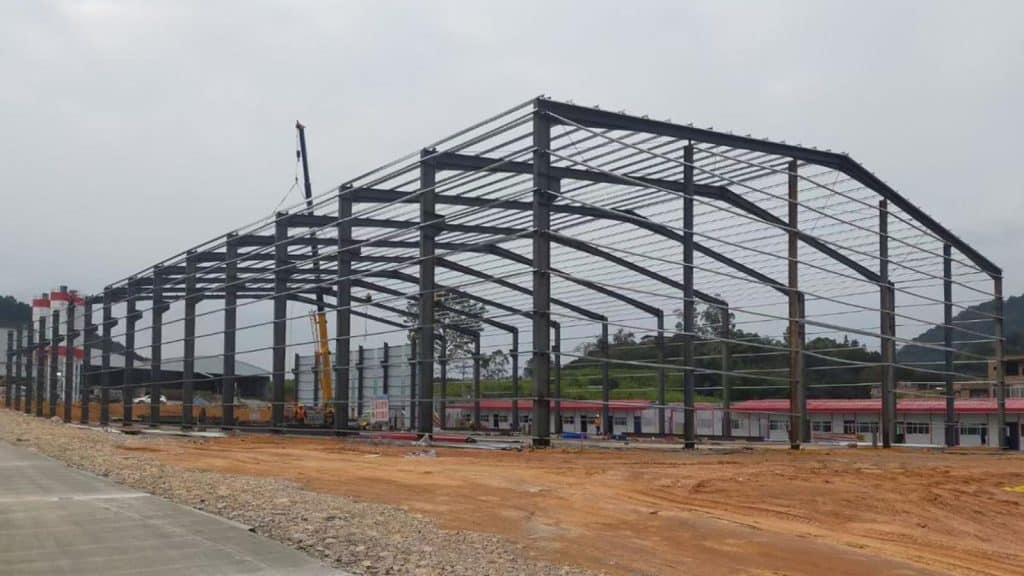
Primary Structural Components: Columns, Beams, and Main Frames
The primary structural system forms the load-bearing backbone of a steel building. The most important steel building components in this system are steel columns and steel beams, which together create the main structural frame.
Steel columns are vertical members designed to carry compressive loads from the roof, floors, and upper structural elements down to the foundation. Depending on design requirements, columns may be made from hot-rolled H-sections, box sections, or welded built-up sections. Their primary role is to provide vertical support and maintain overall building stability.
Steel beams are horizontal or inclined members that span between columns. They support roof systems, floor structures, and operational loads. Common beam types include I-beams, H-beams, and tapered beams, selected based on span length, load capacity, and structural efficiency.
In many industrial and commercial steel buildings, columns and beams are connected to form rigid frames. These frames are capable of resisting bending moments and lateral forces without relying solely on bracing systems. Rigid frames allow for large open spaces and flexible interior layouts, making them suitable for warehouses, factories, and logistics facilities. Together, columns, beams, and frames represent the most fundamental steel building components responsible for load transfer and structural safety.
Secondary Structural Components: Purlins, Girts, and Bracing
Secondary structural members support the primary frame and help distribute loads throughout the building. Key secondary steel building components include purlins, girts, and bracing systems.
Purlins are horizontal members installed along the roof, spanning between main frames or trusses. Their function is to support roof panels and transfer roof loads to the primary structure. Purlins are typically cold-formed steel sections, such as C-shaped or Z-shaped profiles, chosen for their light weight and structural efficiency.
Girts are similar to purlins but are installed on the walls. They support wall panels, resist wind pressure, and help maintain wall alignment. Girts also contribute to the overall lateral stability of the building.
Bracing systems are critical for resisting horizontal forces caused by wind or seismic activity. Common bracing components include diagonal braces, cross bracing, and tension rods. These steel building components limit structural movement, prevent excessive sway, and improve overall stiffness. Without proper bracing, a steel structure may experience deformation even if its primary frame is strong.
 C-type roof purlins – Connection method
-
Z-type roof purlins – Connection method
-
Wall purlins – Connection method


Roof and Wall Systems: Panels, Insulation, and Envelope Components
The roof and wall systems form the building envelope and play a major role in protecting the structure from environmental conditions. These systems are composed of multiple steel building components working together to provide weather resistance, thermal performance, and durability.
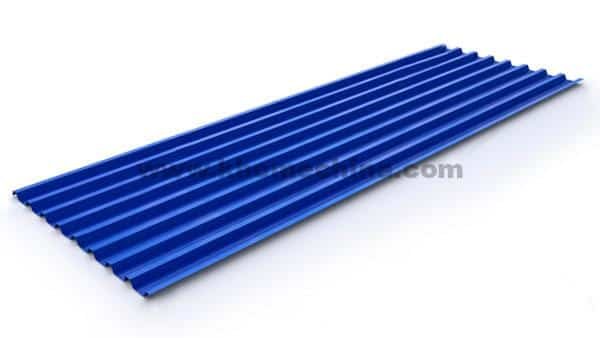
Steel roof panels are commonly made from galvanized or pre-painted steel sheets formed into corrugated or trapezoidal profiles. Their shape enhances structural strength and allows efficient spanning between purlins. Roof panels protect the building from rain, sunlight, and temperature changes while contributing to overall load resistance.
Wall panels provide similar protection on vertical surfaces. Depending on project requirements, wall systems may use single-layer steel sheets or insulated sandwich panels. Insulated panels combine outer steel sheets with core materials such as polyurethane (PU), rock wool, or EPS to improve thermal and acoustic performance.
Insulation components are essential for controlling indoor temperature, reducing energy consumption, and improving occupant comfort. In many modern steel buildings, insulation is integrated directly into roof and wall panels, simplifying installation and improving performance consistency. These envelope-related steel building components are critical for both structural protection and building efficiency.
 Enclosure System – Steel Sheet



-
Enclosure System – Sandwich Panels


Connection Components: Bolted and Welded Joints
Connections are the interfaces where steel building components are joined together, and their design is vital to structural performance. The most common connection components include high-strength bolts, connection plates, and welded joints.
Bolted connections are widely used in steel construction because they allow for fast installation, reliable performance, and easy inspection. High-strength bolts are used to connect beams to columns, braces to frames, and secondary members to the primary structure.
Connection plates, such as end plates and gusset plates, are designed to transfer forces between connected members. Gusset plates are often used in bracing systems, while end plates are common in beam-to-column connections. These plates are carefully engineered to handle shear, tension, and compression forces.
Welding is primarily used during fabrication to create built-up sections or permanent joints. Welded connections provide high strength and rigidity, especially in complex structural assemblies. Proper welding procedures and quality control are essential to ensure the reliability of these steel building components.
Floor Systems and Structural Deck Components
In multi-story steel buildings, floor systems are important load-bearing steel building components. These systems typically consist of steel beams, metal decking, and concrete slabs.
Metal decking is a profiled steel sheet installed over floor beams. It acts as permanent formwork for concrete and provides a working platform during construction. The deck profile increases stiffness and improves load distribution.
In composite floor systems, steel beams and concrete slabs work together through shear connectors, allowing both materials to contribute to load resistance. This composite action improves structural efficiency and reduces overall material usage.
Floor systems also affect fire resistance, vibration control, and acoustic performance. Fire protection measures, such as fireproof coatings or encasement, are often applied to steel building components within floor systems to meet safety regulations.
Protective and Auxiliary Components: Coatings, Drainage, and Accessories
In addition to structural elements, many auxiliary steel building components contribute to durability and functionality. Protective coatings are essential for preventing corrosion and improving fire resistance. Common treatments include galvanization, epoxy coatings, and intumescent fireproof paints.
Drainage components such as gutters, downpipes, and flashing manage rainwater and protect the building envelope from water damage. Proper drainage design helps extend the service life of steel structures.
Other auxiliary components include doors, windows, skylights, ventilation systems, and maintenance platforms. While these elements may not carry primary structural loads, they significantly affect usability, safety, and indoor comfort. When properly integrated, these steel building components complete the building system and enhance overall performance.
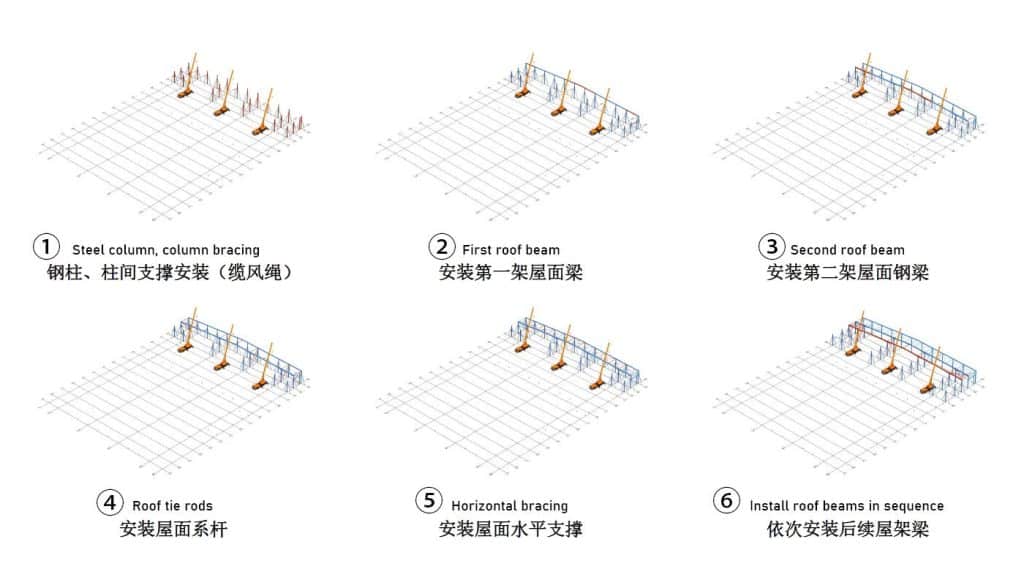
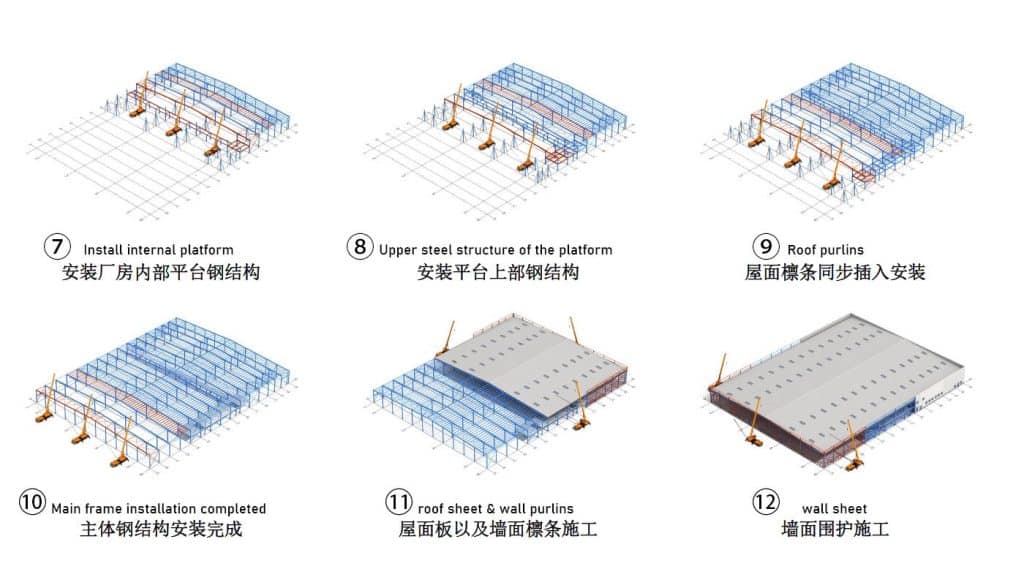
How to assemble a complete steel building?
related reading
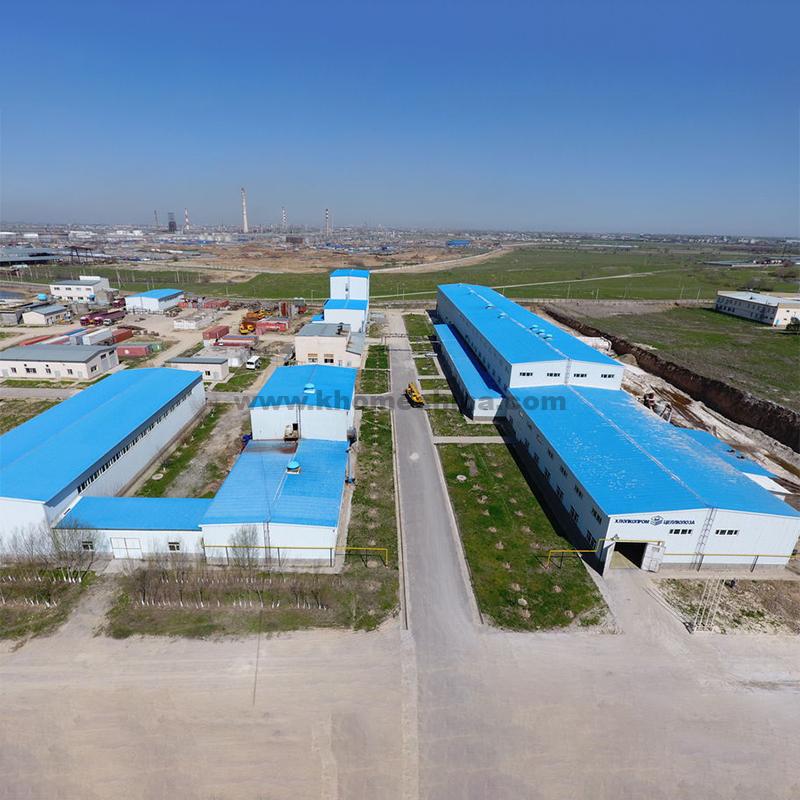
Advantages And Disadvantages Steel Buildings
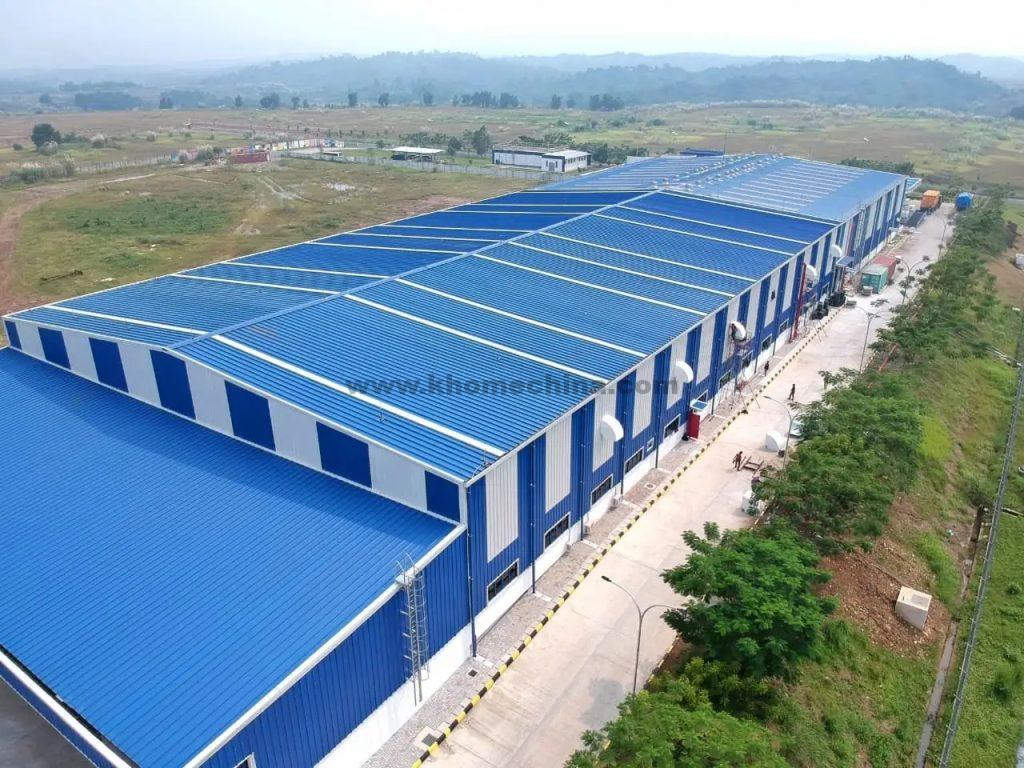
How Much Does a Steel Building Cost?
Our Projects
For more than 15 years, K-home has focused on providing long-term affordable, practical, and efficient on-site space management solutions
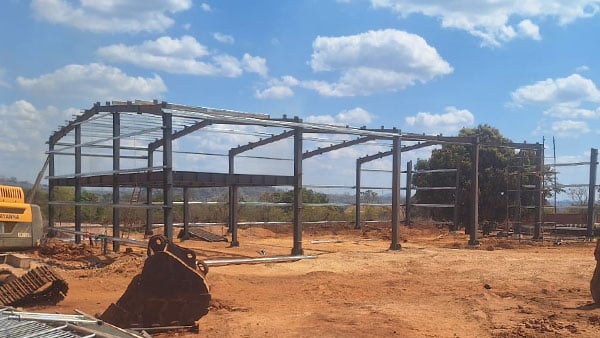
Steel Structure Warehouse in Mozambique
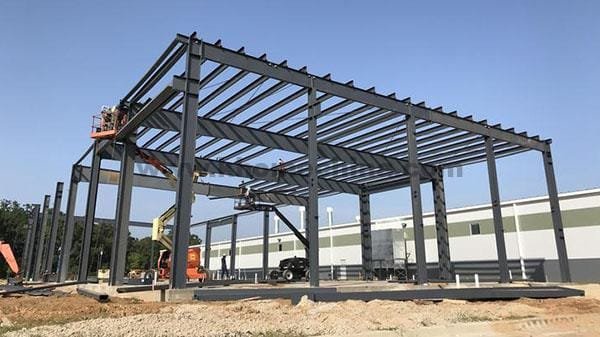
Peb Steel Buildings in Philippines
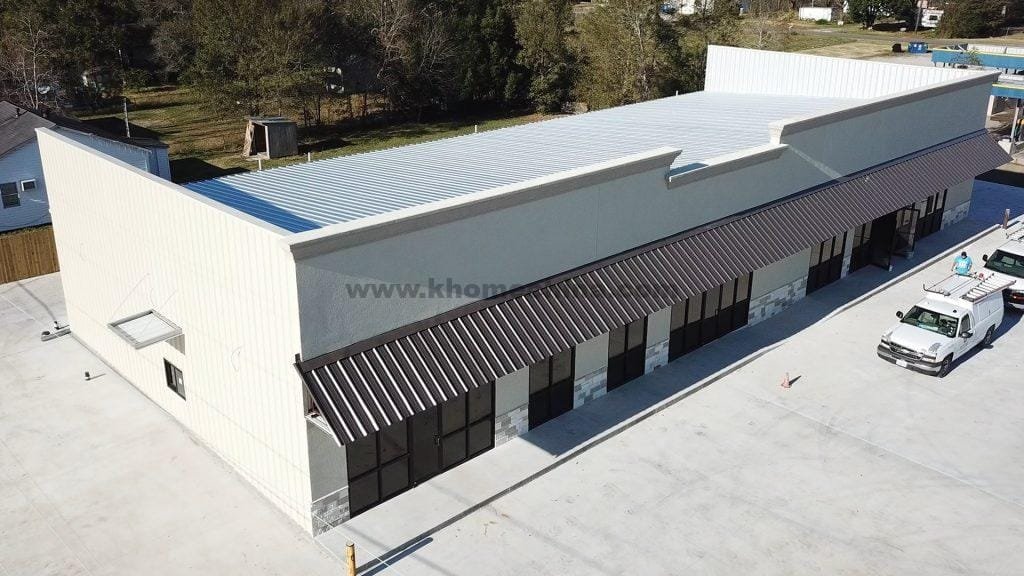
Galvanized Steel Buildings in Duce, Nigeria
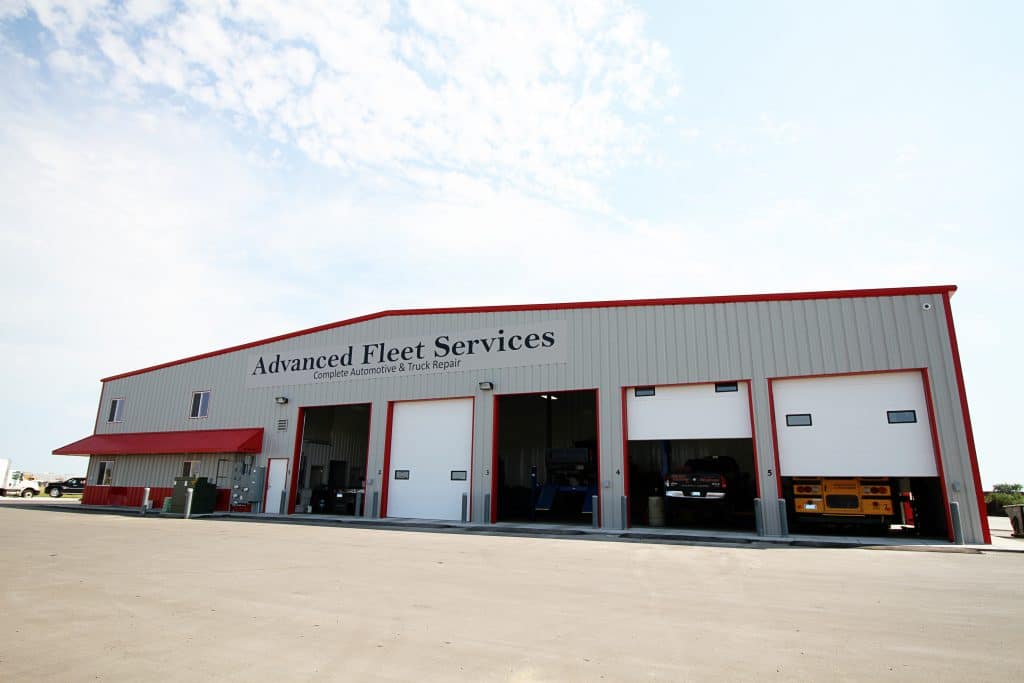
100×70 Steel Auto Shop In Kenya
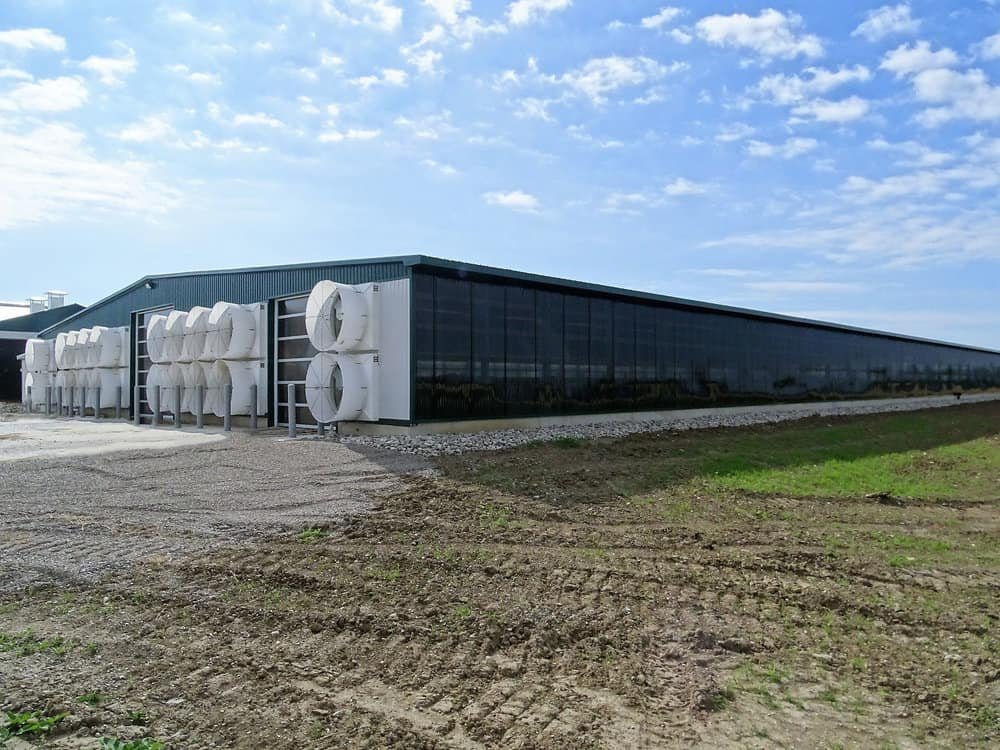
Ethiopia Poultry Farm Shed for Laying Hens is Successfully completed

Prefab Warehouse Buildings Project in Belize
SEND A MESSAGE