
Frequently Asked Questions
General FAQs of container houses
The container-type house is generally used in all areas of society. They are not only used for short-term and long-term construction sites and on-site office space, but also increasingly used as long-term apartment rooms, commercial rooms, restaurant rooms, and shop rooms. Its environmental protection and energy-saving advantages, ease of assembly, sensitivity, safety, comfort and practicality, and low-cost benefits are more and more popular and liked by people.
As a leading container house manufacturer in China, K-home has been adopting green design concepts and the mission of “making temporary buildings safer and more comfortable”, innovative and unique high-tech, and vigorously develops energy-saving, Prefabricated integrated houses with environmental protection and other characteristics. K-home has achieved standardized production, equipped with a complete supply chain management system and professional logistics, installation services, and after-sales service systems to provide global customers with a full range of temporary housing solutions.
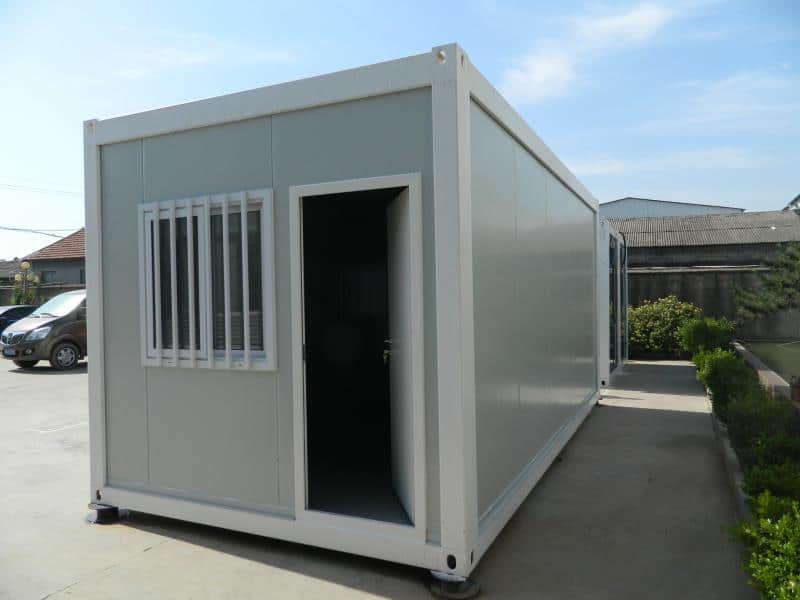
The main differences lie in size, structure, installation speed, and transportation cost.
- Detachable container houses can be customized in size, require on-site assembly, have low shipping costs but high labor costs;
- Flat Pack container houses are limited to 2.4×5.9m per unit, have a high degree of factory prefabrication, and a good appearance;
- collapsible container houses are the fastest to install, taking only a few minutes to assemble.
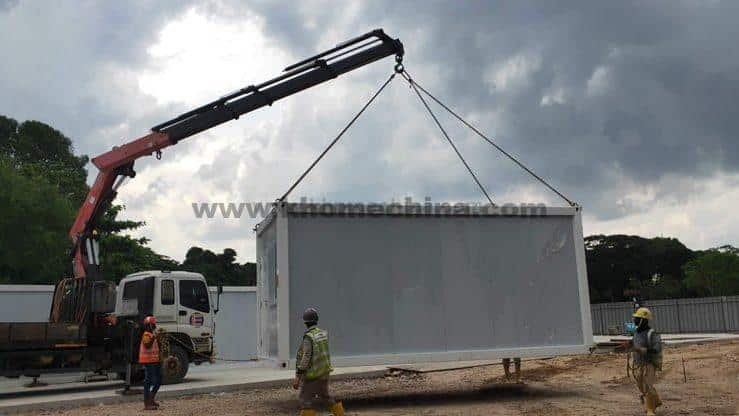
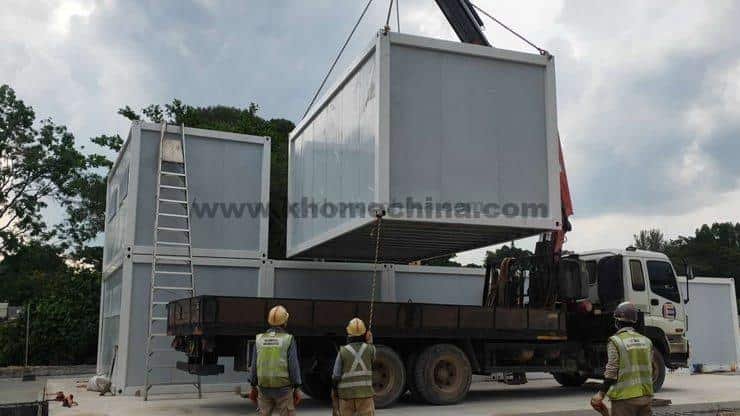
Folding container houses are the fastest. With the assistance of a crane, a set can be installed in 10-15 minutes.
For prefabricated and modular container houses, we have designed unique drainage systems.
The roofs are sloped, and there are gutters around the roof to collect rainwater and drain it through downpipes in the columns.
Additionally, we have waterproof sealing strips between the wall panels and the steel frame. If installed correctly, the house can be guaranteed to be waterproof for life.
During typhoons, we recommend Detachable container houses. Our detachable container houses have larger steel frames, offering higher safety, and we also provide anchor bolts for securing them.
All Structure Are Modular Design
The prefab container house is our newest type of design since 2019. We have updated many items to make the structure more safe and reasonable. As following is our advantage:
1. More Sturdy and Durable
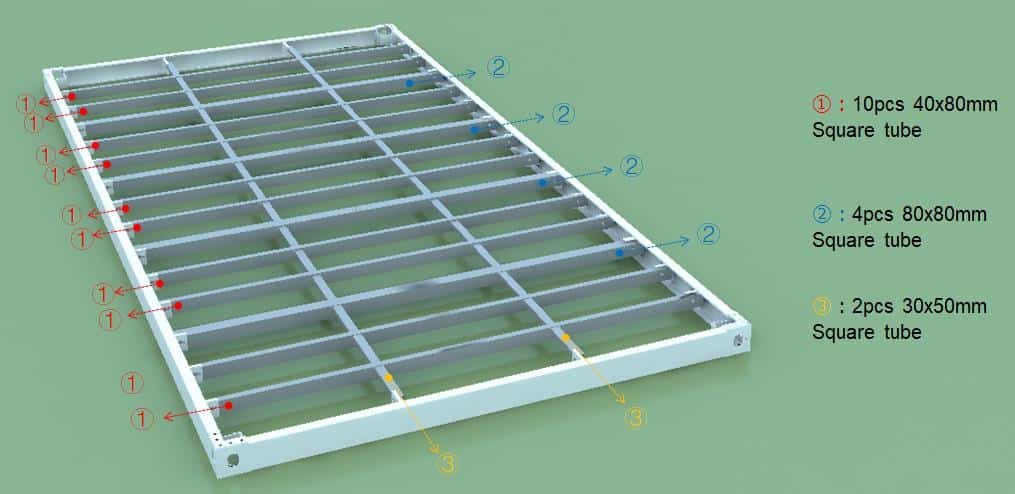
Both our bottom and roof purlin quantity are increased. Other suppliers are 10pcs and ours are 14pcs for the bottom. The mainframe of the product is pressed by a special steel plate and has 4 pcs 160x160x2480mm column, which is sturdy and durable and has strong earthquake resistance and deformation resistance.
2. Complete Drainage System
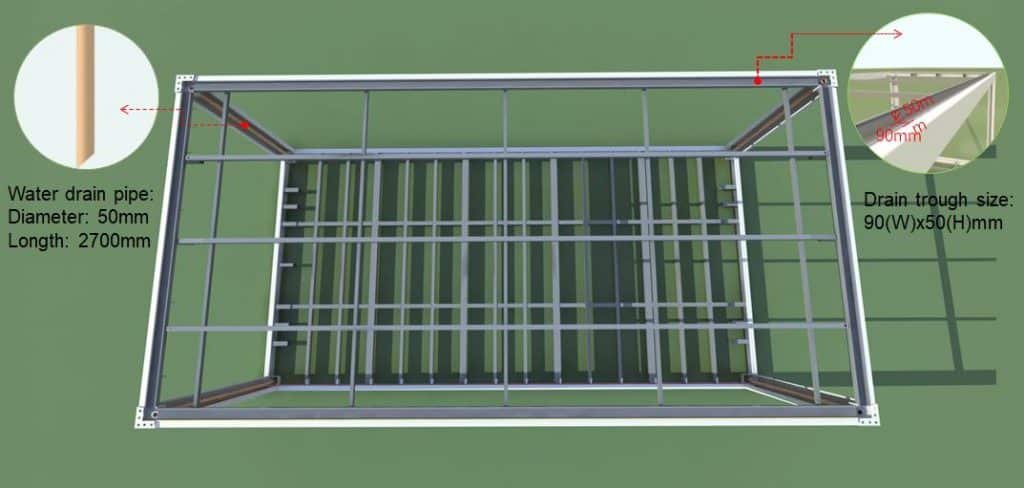
We modified the water drain system, each column is designed and equipped with 4 water drain pipes. and we design big water drain channel for the roof structure, even for big rain, the house will be very water-proof.
The drainage system of the container house is composed of four water channels and downpipes. When it rains, the rainwater on the roof will be collected into the water channel and then flow down through the downpipe of the corner posts to provide an orderly drainage system to achieve better drainage and Easier rainwater collection.
3. Stable And Firm
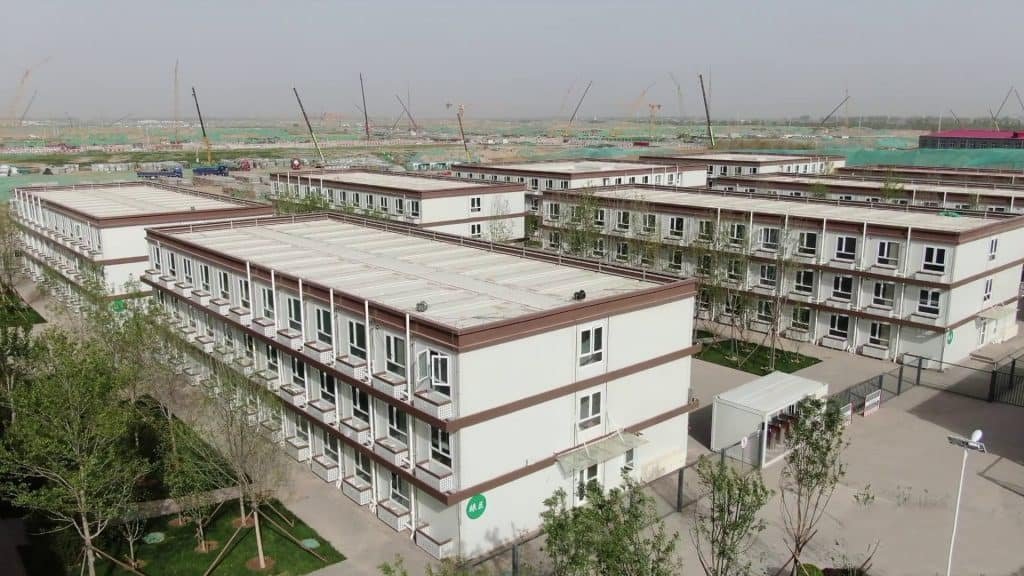
The container house could be stacked for 3 floors. Our column and roof, and corner joints are stronger, You could move the house very safely and quickly.
4. Fireproof And Soundproof
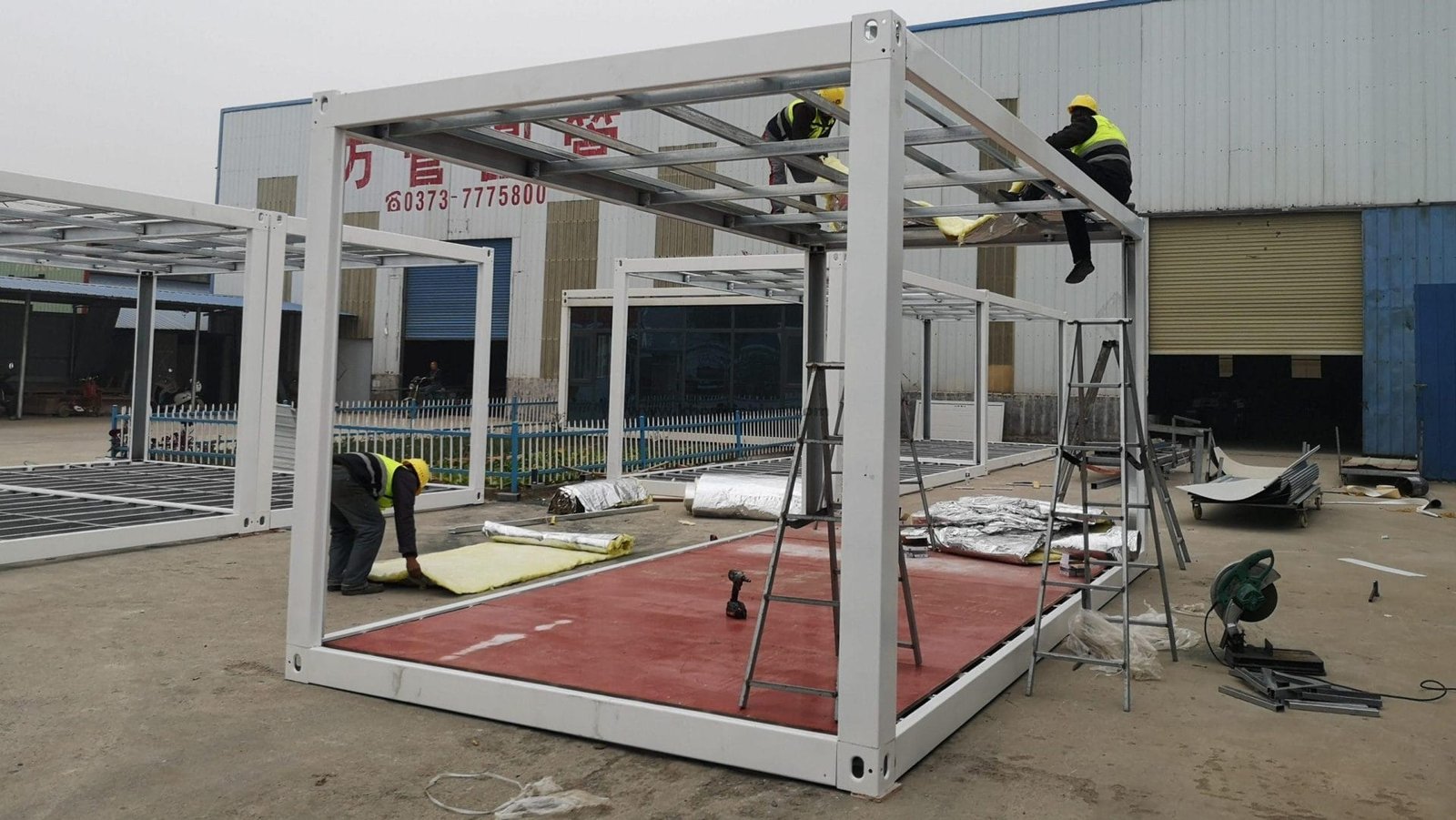
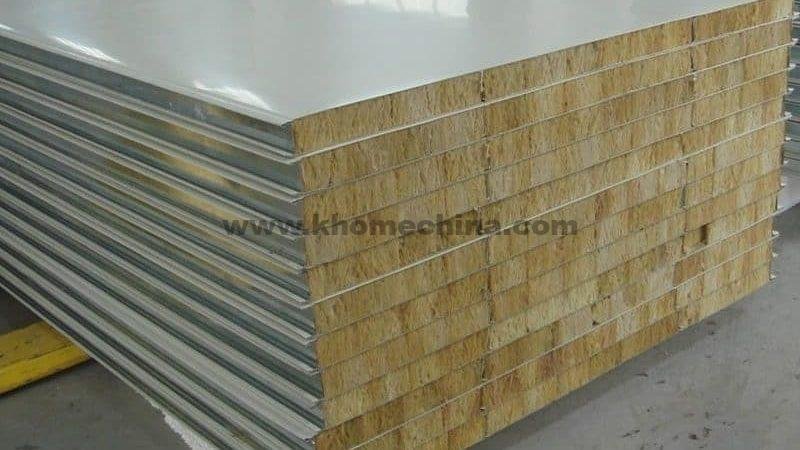
Thickened Rockwool Wall Sandwich Panel is Class A fireproof, and the side panels have special sound insulation and heat insulation fillers, which can play the role of heat insulation, sound insulation, cold protection, and fire prevention. Can be moved multiple times, reused, hoisted as a whole, the service life is more than 20 years.
• Research the building regulations in your area: different cities may have different rules and regulations for the construction of container houses. Before starting to build a house, make sure that you are familiar with the issues related to approval and are ready to consult with relevant departments such as the local planning bureau. Of course, the current container construction projects we have completed have been recognized in most countries in Africa and Southeast Asia.
• Drawing/plans: Before buying a container house, make sure you have prepared or designed the layout. If not, please send us your requirements for size and layout. K-home has professional engineers who can provide you with a complete construction plan.
• Geographical environment/climate characteristics: roof design, floorboard material selection, drainage pipe design, etc., We need to choose more suitable materials and designs according to your geographic environment and climate characteristics.
Purchase all containers from the reliable manufacturer
There may be slight differences in the quality and size of containers from different manufacturers. Therefore, it is very necessary to choose a manufacturer that suits your needs and purchase them in a unified manner.
• Find the right contractor
Choosing the right contractor can avoid detours, reduce construction time, ensure a smooth construction process, and solve many possible problems.
• Transportation: Before any transaction, confirm the transportation cost and delivery period.
For non-professionals, how to build a container house step by step is not easy. To simplify the operation, we made a video of the installation of a standard container unit and wrote the container house installation guide so that you can quickly complete the installation.
Step 1. Main Steel structure Frame Installation, divided into six steps
- Install the ground beam. Place the corner joints and ground beam on the level. Connect the corner joints and fix them with bolts. Do not tighten it too tightly to facilitate correction after. After connecting, use a ruler to correct the angle to ensure that the bottom of the house is rectangular. The spirit level is adjusted horizontally to ensure that the bottom of the house is level.
- Install the purlin of the ground frame, please install the two purlins in the middle first. At the same time, use a ruler to correct the size to be consistent with the angle head size data, then tighten the bolts and install other purlins.
- Install four columns. Be careful not to tighten the screws too tightly, and you should use a level to correct the verticality.
- Lay the floor.
- Then, connect the long beam and corner joints on the ground, then lift it up and place it on the corner post, connect each corner head with bolts, and also pay attention not to tighten the bolts. Secondly, connect the two short beams. Finally, tighten the bolts.
- Install the roof purlin is the same as installing the ground purlin, but also install the middle purlin first, and the middle distance is the same as the two ends.
Step 2. Installation of drainage structures,divided into two steps.
1). Install the water gutter. First, paste the sealing atrip on the back of the water gutter along the edge. Embed the water gutter and fix it on the roof beam.
2). Install the downspouts.
The installation of the main steel frame of a standard container unit has been completed. Next, we continue to the installation.
Step 3. Install the wall panels in order, including the door and windows.
Fix the bottom and top of the wall panel to the beam. The standard container house unit has one door and two windows, which are flexible and can be changed according to the needs.
Then, install the concealed project “electrical circuits”. fix the wire on the steel wire and pass it throught the wall panel. At the time of attention should be paid to the technology and material use of waterproof construction to ensure safe living.
Step 4. Install the ceiling panels.
You need to fix two 30mmx50mm purlins at the top purlin, for fixing the ceiling panels. Then, place a ceiling panel and do support, and then fix it at both ends.
Step 5. Lay the roof steel sheet.
First, cut the glass wool to a suitable size and then lay it on the roof. Then laying the roof steel sheet.
Step 6. Lay the floor leather. First, brush a layer of floor leather glue on the ground, then paste it.
Step 7. Install the corner line of the top, side, and bottom.
Yes, the installation of a single container unit is all completed.
If you still do not understand this installation step, please watch our installation video carefully, or check this link https://khomechina.com/blog/how-to-build-a-container-house.html
Normally, it only needs to be placed on flat ground for use. If site conditions do not meet the requirements, a dotted or strip-shaped foundation can be installed.
You can refer to “How To Anchor A Prefabricated House To The Foundation?“
- The walls are constructed with fire-resistant and heat-insulating rock wool sandwich panels;
- The roof is made of fire-resistant and heat-insulating glass wool;
- The floor is made of magnesium oxide board, which has mildew-resistant properties;
- All steel structure frames are made of high-temperature powder-coated galvanized steel, ensuring long-term rust prevention.
Our container roof uses 75mm thick fiberglass insulation, effectively reducing rain and wind noise.
The sandwich panels in the walls reduce disturbance from conversations and small appliances in adjacent areas, making it quiet enough for daily work and rest.
We can also customize the materials to your specific needs for even better sound insulation.
● Regarding wind load and structural safety, you can refer to our calculation manual, which complies with Chinese standards. The container structure can withstand wind speeds of up to level 15.
● Walls: Based on your requirements, we provide EPS boards, which are not fireproof.
If you require better fire-resistant materials, we recommend using rock wool sandwich panels.
● Roof: The glass wool insulation material is Class A.
We have many similar projects in Australia, and our clients are still using them.
Regarding whether it has been approved by the local municipal council in Australia, frankly, we are not sure. You can consult a qualified local design firm.
If municipal approval is required, a stamp from a locally certified design firm is needed; they will inform you whether the materials are applicable.
If a stamp is not required, you can use our materials.
The expected lifespan is approximately 20-25 years; with regular maintenance, it can be longer.
FAQ of detachable containers
FAQ of flat pack containers
FAQ of folding container houses
Special-shaped steel galvanized rectangular pipe with large and small opening (bite-mouth design) for the waist folding structure. This design can effectively prevent rainwater from entering the room.
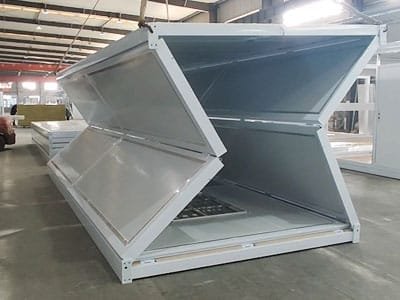

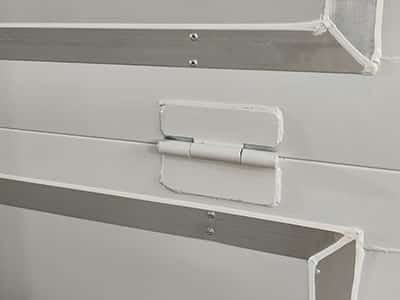
The number of folds a folding case can be affected by its hinges.
Our folding cases have a total of 36 reinforced solid shaft hinges, 4.0mm thick, all using an oval protrusion design, which can withstand up to 1000 folds without damage.
Yes, but a riser frame is required; the entire bottom must be properly installed.


Although the folding container has a foldable structure, its design, including sandwich panels in the walls, an insulation layer, and waterproof sealing strips, achieves insulation and waterproofing performance similar to fixed container houses.
The inner layer of the color steel plate is thickened, and the sandwich panel has a high density, effectively insulating against heat and cold.
Regarding fireproofing, the container material uses Class A flame-retardant materials, with added fireproofing treatment at key points.
We have tested the performance of the folding container under different climatic conditions, proving that it can still be used safely in rainy seasons, high-temperature environments, or cold environments. However, reinforcement or upgraded protection options are available for extreme weather.
The latches and connectors of the folding container are crucial to ensuring structural stability. They are made of high-strength alloy materials with a rust-proof coating.
Folding containers are designed for repeated use.
Unfolding and folding are simple and can be done quickly even by non-professionals. Their small size when folded saves space, making them convenient for storage and transport, ideal for frequent handling or long-term storage.
A high-strength steel frame and durable connectors ensure the crate remains stable and undamaged during repeated unfolding, folding, and transport, making it safe and reliable for temporary use on construction sites, warehousing, transportation, or sales.
Yes, folding containers can be assembled and assembled to expand the interior space and meet the requirements of different apartment layouts.
We can provide you with a free layout design plan. Interior partitions can be designed; the partition wall panels are placed separately and need to be installed on-site.
service
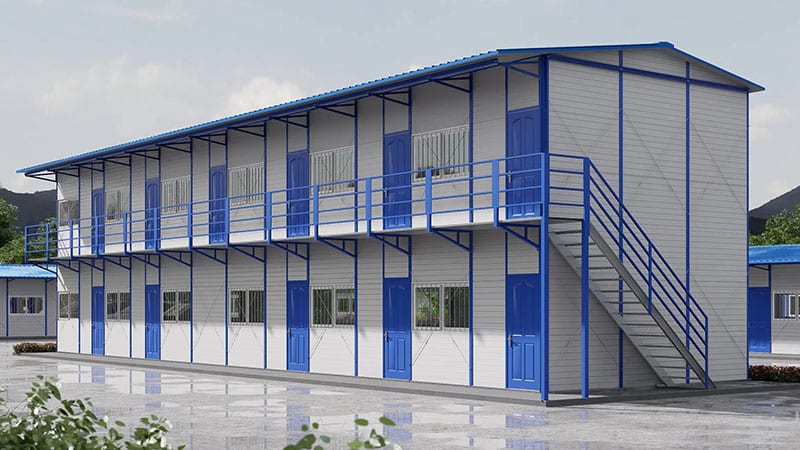
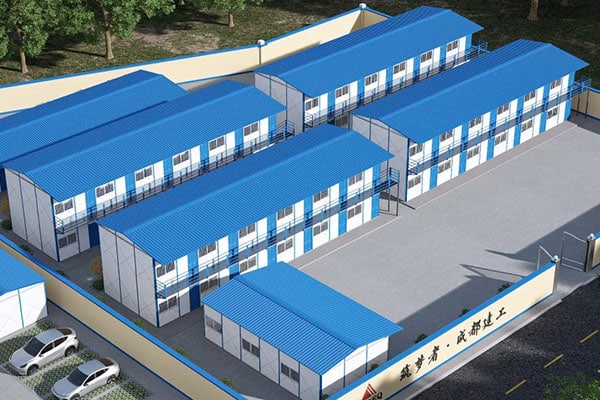
Prefabricated Panelized Houses are constructed using a light steel frame and sandwich panels as the enclosure. Common types include K-type and T-type.
K type prefab house:
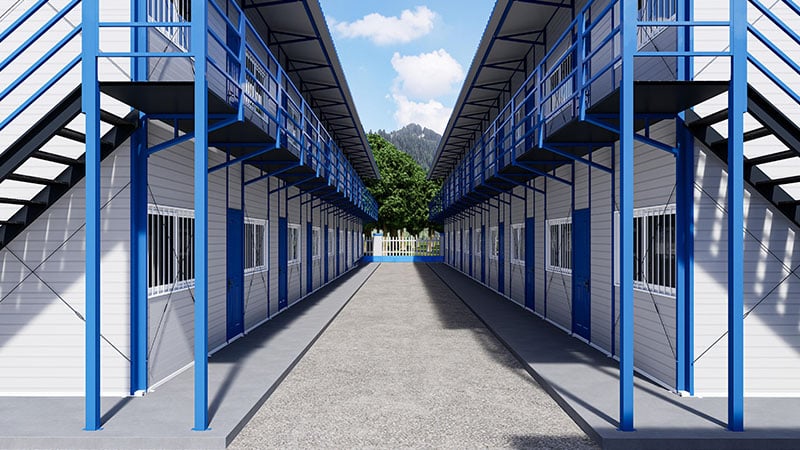
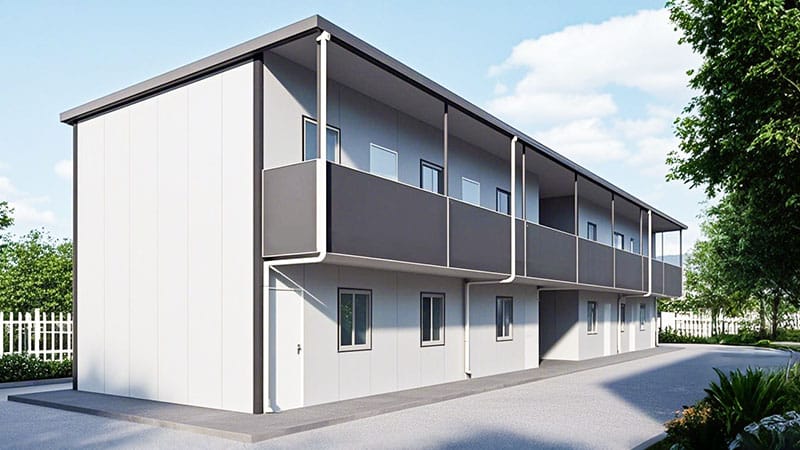
T type prefab house:
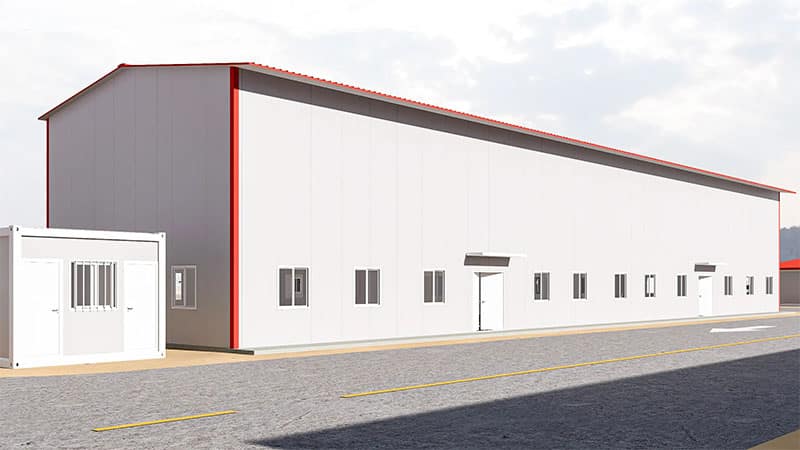

K-type houses cannot be customized because they are designed based on a fixed coefficient K. The length and width must be integer multiples of K, resulting in a limited layout design.
T-type houses, on the other hand, can be flexibly customized in size. The layout can be adjusted to meet specific needs. By adding internal partitions, they can be transformed into single dormitories, multi-person offices, or even combined into classrooms and other functional spaces.
The main steel frame of a T-type house is made of C-shaped steel and galvanized square tubing, resulting in a stable and sturdy overall structure with good wind and earthquake resistance. It can withstand winds of approximately force 8 and earthquakes of magnitude 8.
K-type houses have weaker wind resistance and are generally used in areas with lower wind speeds.
Prefabricated Panelized houses use sealant at the joints of the roof and walls during construction. The waterproofing is sufficient for daily use and leaks are unlikely.
However, with age, the sealant may deteriorate, or improper installation may lead to leaks. Regular inspection and maintenance can effectively prevent this.
Most components of prefabricated houses are manufactured in factories beforehand, requiring only assembly on-site. This significantly shortens the construction period compared to traditional buildings.
A typical single-story prefabricated house can be installed by a few workers in 3-5 days; the construction period for multi-story prefabricated houses can also be reduced by more than 50% compared to traditional buildings.
It depends on the situation.
For short-term use buildings such as temporary dormitories or temporary offices on construction sites, temporary building permits are generally required when submitting the project application.
However, for prefabricated houses intended for long-term residential or commercial use, complete approval procedures, including planning permits and construction permits, are required as permanent buildings. For specific details, please consult your local housing and construction department.
When constructing the concrete slabs of a Type K house, we recommend that clients install a waterproofing layer to prevent rainwater from seeping into and flowing back into the foundation structure.
In addition, our houses have waterproof channels in the ground beams, which adds another layer of protection against rainwater leakage and backflow.
This type of prefabricated house requires a complete concrete floor.
If your site is soil, you need to compact and level the ground, and then lay a 10-centimeter-thick layer of hardened concrete. If your layout includes a drainage system, you need to reserve space for drainage pipes when constructing the foundation. Additionally, a sloping edge can be created along the outer edge of the foundation for drainage.
contact us
Call us now
+86 373 2511966
Adress
Xiaodian Industrial Park, Xinxiang City, Henan Province, China
Websites
Request a Quote
For a quick quote, please fill out the Inquiry Form. Our sales team will contact you as soon as possible.