
In the Philippines, prefabricated container vans offer endless possibilities as temporary spaces.
Whether you’re running a construction project in Cavite, managing a school expansion in Mindanao, or supporting a community project in a remote island — traditional construction takes time, permits, labor, and budget.
That’s why many contractors, developers, NGOs, and even local government units are now turning to container vans as fast and practical space solutions.
Furthermore, during economic downturns, the container vans are more affordable and easier to maintain. They also have a smaller environmental impact compared to traditional houses.
What are the different uses of a container van in the Philippines?
1. Construction Site Dormitories (Workers’ Quarters) – Safe & Affordable Housing for On-Site Labor
One of the most essential 5 Uses of a Container Van in the Philippines is construction site dormitories (workers’quarters). With most construction projects in the Philippines, whether in Metro Manila, Cebu, or Davao for employing dozens of workers who need nearby accommodation, container vans offer a cheap, secure, and convenient solution.
Unlike temporary shanties or rented houses (which are costly and often unsafe), converted container dormitories provide a comfortable living space that’s easy to set up and relocate as the project progresses, making this one of the most practical 5 Uses of a Container Van in the Philippines for construction teams.
Local construction companies commonly use container vans for dormitories, as they offer enough space to fit bunk beds, storage lockers, and a small common area,toilet and shower. These containers are customized to suit the Philippine climate: insulated to beat the tropical heat, fitted with windows, and equipped with basic lighting and electrical outlets. Many also include small fans or air conditioning units (critical for hot months) and secure locks to protect workers’ belongings, enhancing the value of container van dormitories in the Philippines.
container Accommodation floor plans
- Single-Unit Container Accommodation Floor Plans: Ideal for small-scale housing needs, single-unit container accommodations are compact yet fully equipped. These units are typically equipped with beds and storage space, and can be fitted with private bathrooms as needed. Perfect for single-occupancy workforce housing or temporary shelter, they can be deployed quickly and efficiently to any site.
 10′ container dormitory
-
10′ container dormitory with bathroom
 20′ container dormitory for 2 person
-
20′ container dormitory for 3-6 person

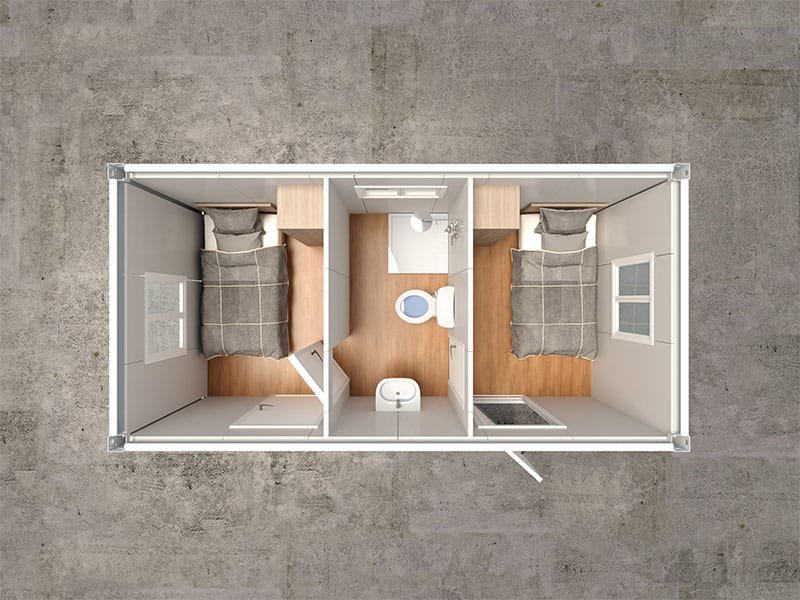


- Multi-Room Container Accommodation Floor Plans: For slightly larger groups, KHOME offers multi-room container accommodations. These floor plans include separate sleeping quarters, shared common areas, and amenities like bathrooms and kitchens. Designed for optimal space utilization, these units provide privacy while fostering a sense of community.
-
36m² modular accommodation
Capacity: 6 person / 2 units -
36m² modular accommodation
Capacity: 16 person / 2 units -
54m² modular accommodation
Capacity: 20 person / 3 units
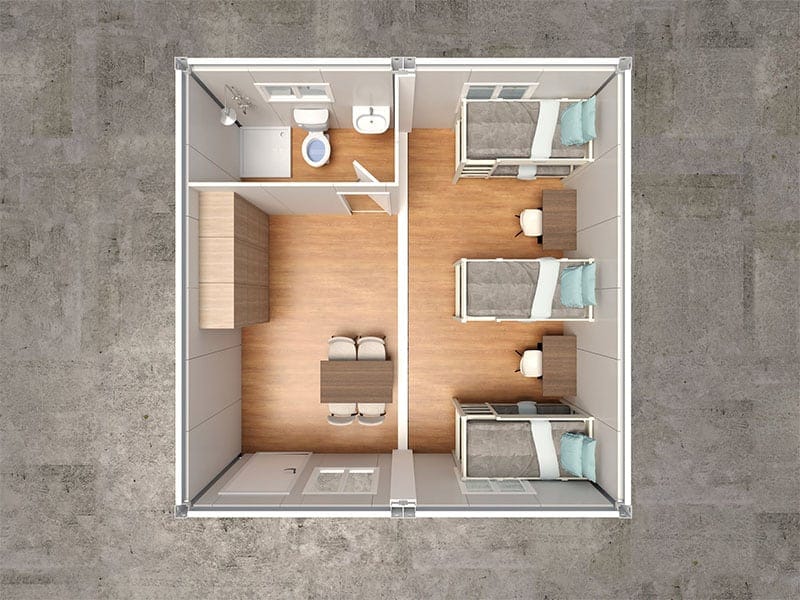
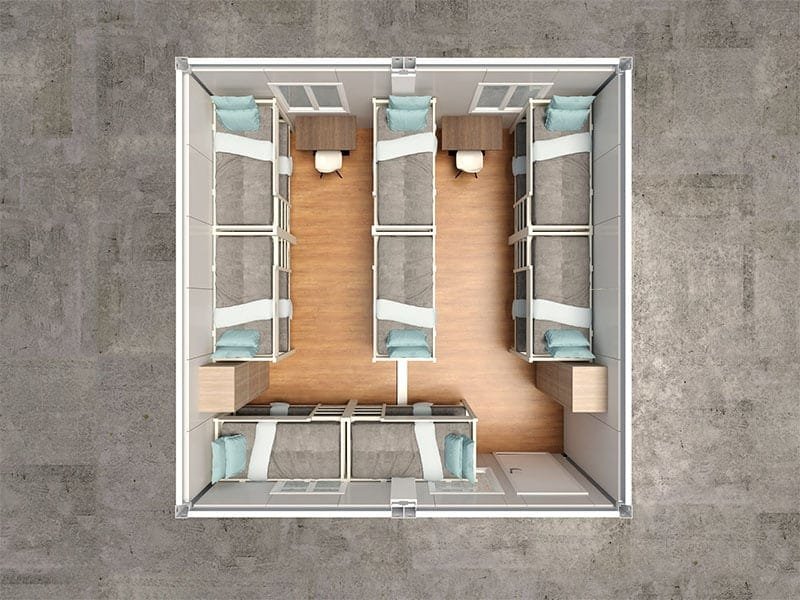
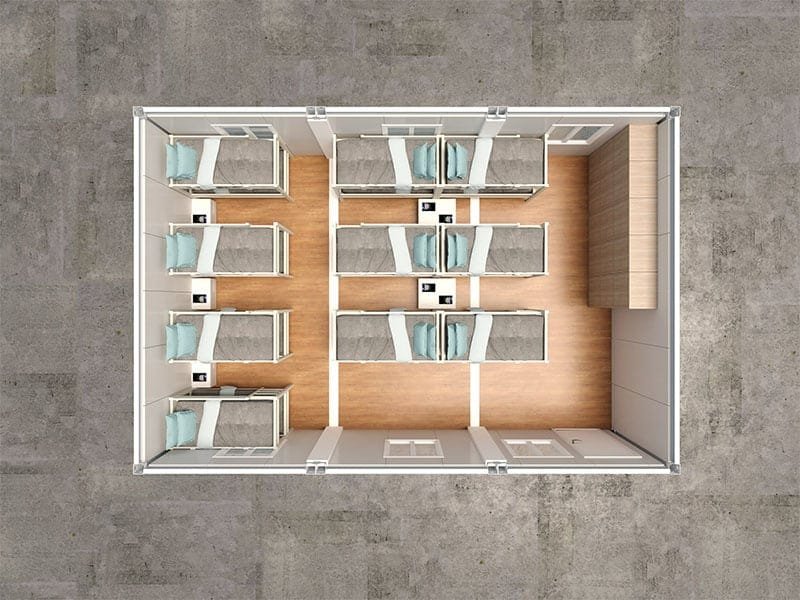
- Dormitory-Style Container Floor Plans: KHOME’s dormitory-style container accommodations are designed to accommodate large groups. These designs are particularly suitable for large construction sites and integrated camps. Each dormitory unit is equipped with bunk beds, accommodating 2-8 people, and can have a private bathroom or a shared communal bathroom. This design is an economical and efficient accommodation option for workers.
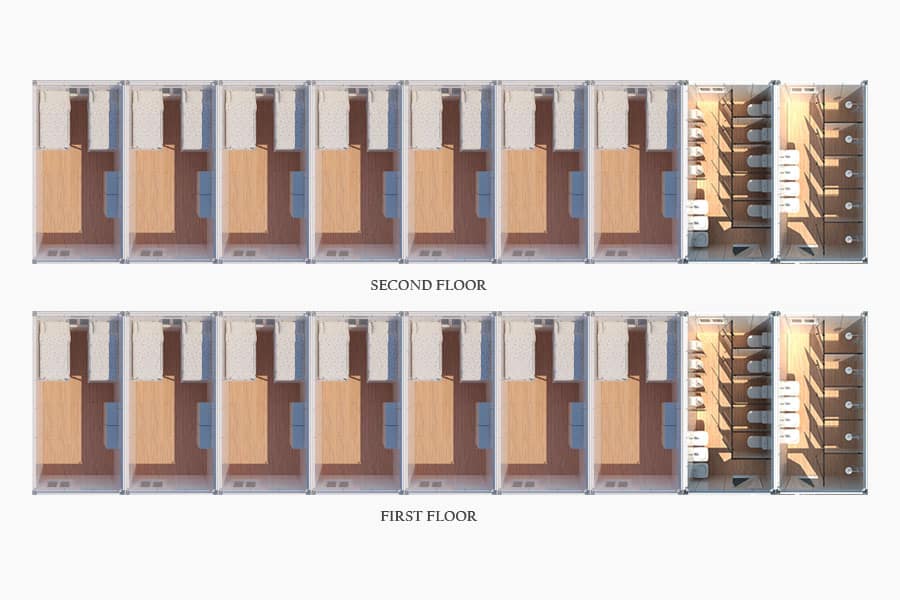
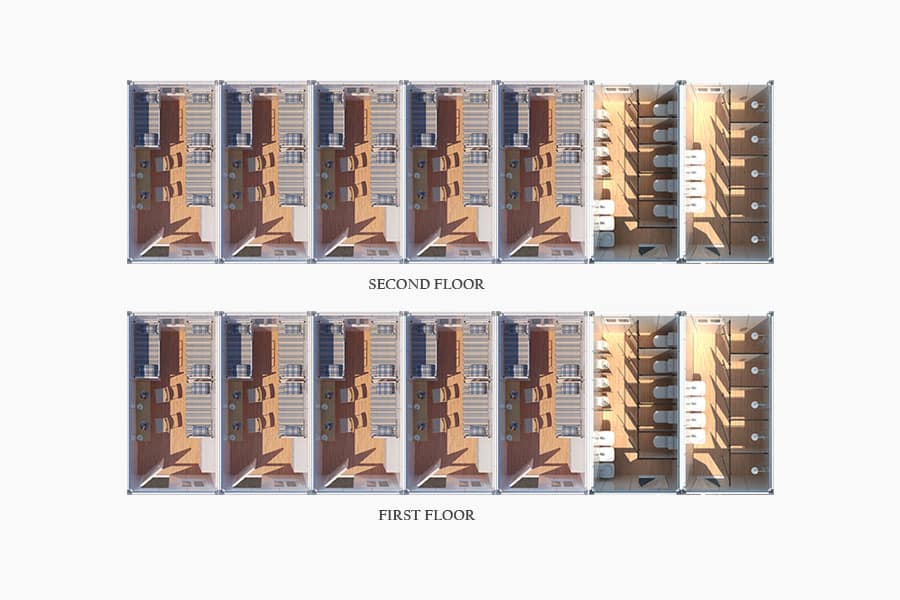
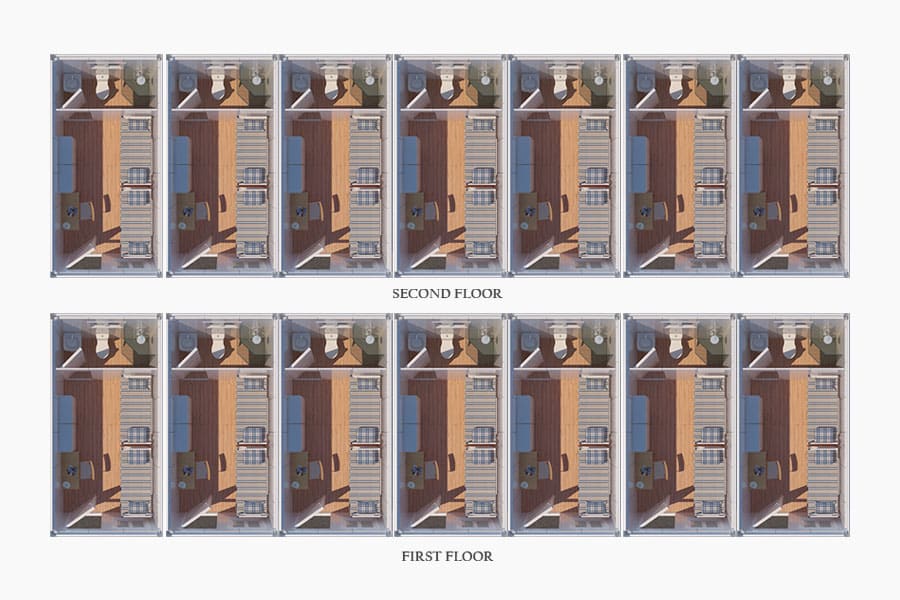
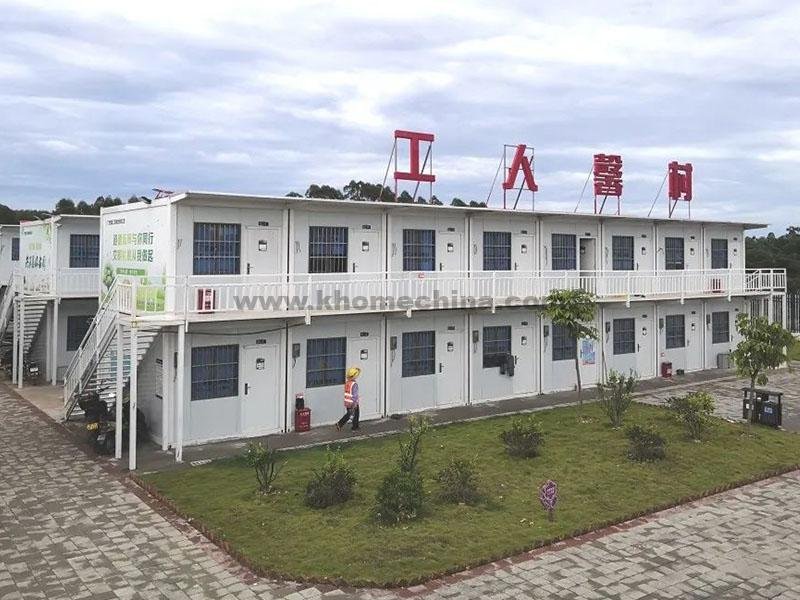


Key features of the Philippines construction container dormitories
- Space-efficient design: 20ft containers fit 4–8 workers with bunk beds, maximizing space for on-site living.
- Climate-adapted: Thermal insulation and ventilation systems keep interiors cool, even during the hot summer months (March–May), tailored to the Philippines’ weather.
- Secure: Heavy steel doors and padlocks prevent theft, a common concern for workers leaving their belongings on-site, adding value.
- Portable: Can be moved to new construction sites once a project ends, reducing long-term costs.
- Affordable: 30-40% cheaper than renting off-site accommodation, helping construction companies reduce costs and making it a cost-effective temporary accommodation solution.
2. Temporary On-Site Offices: Functional Workspaces for Project Teams
In the Philippines, closely tied to site temporary accommodation, on-site container offices are another key usage. Whether building roads, bridges, or residential buildings, they require a dedicated workspace for project managers, foremen, engineers, and administrative staff. Container vans are ideal for this, as they can be set up quickly on-site, eliminating the need to rent off-site offices (which waste time and money on commuting).
Most construction companies use container van houses as offices, custom-modifying them with insulation, air conditioning, desks and chairs, lockers, and wiring.
These container van offices are designed for both practicality and comfort, functioning even on remote construction sites such as the Cordillera or Mindanao.
Container van offices typically include meeting areas for team presentations, archives for project documents, and even portable kitchens with coffee and snacks. These functional zones provide employees with efficient workspaces and relaxation areas for long hours.

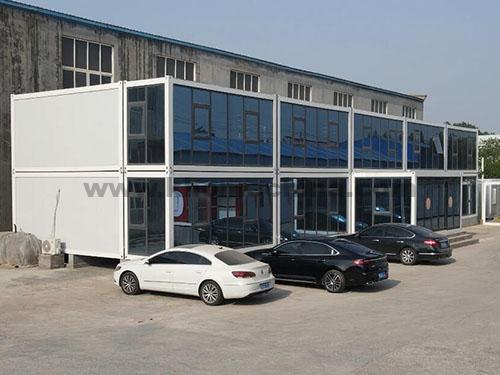


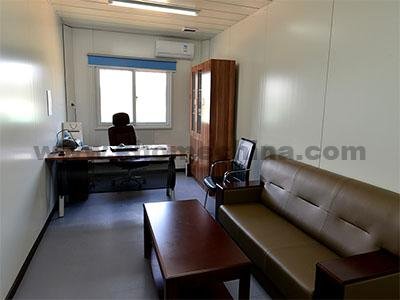

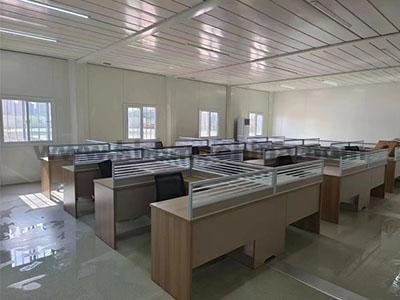
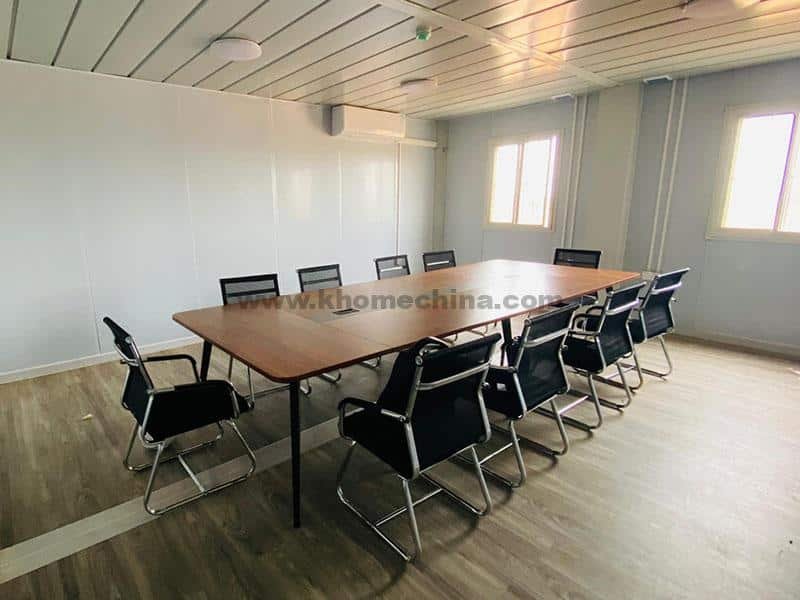
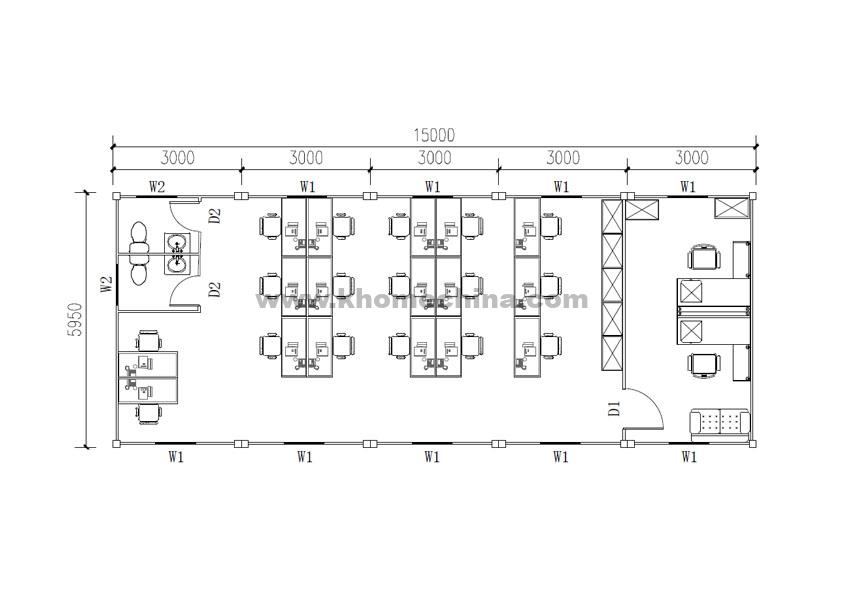
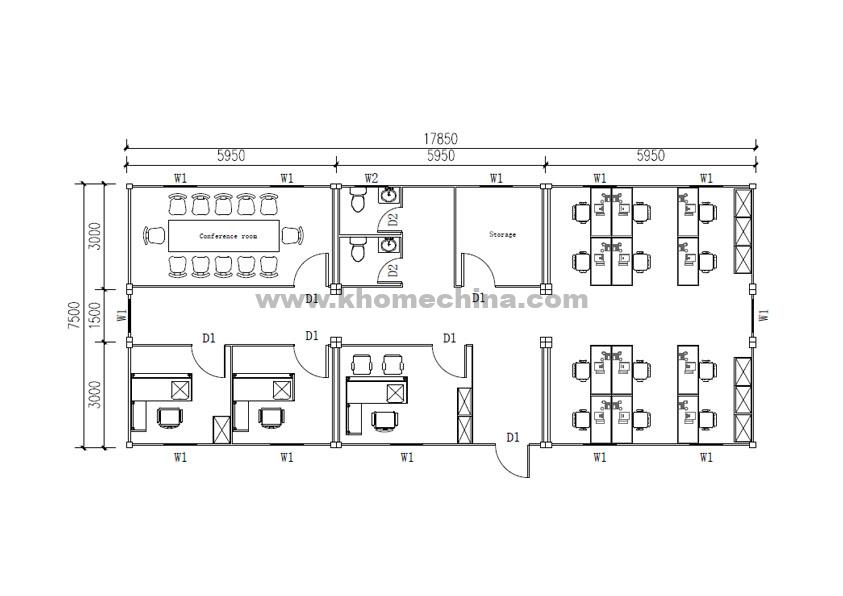
container van office floor plans
- Single-Unit Container Office Floor Plans: Single-unit container offices are ideal for project managers or designers. These units offer ample space to create a quiet working environment or store project drawings and materials.
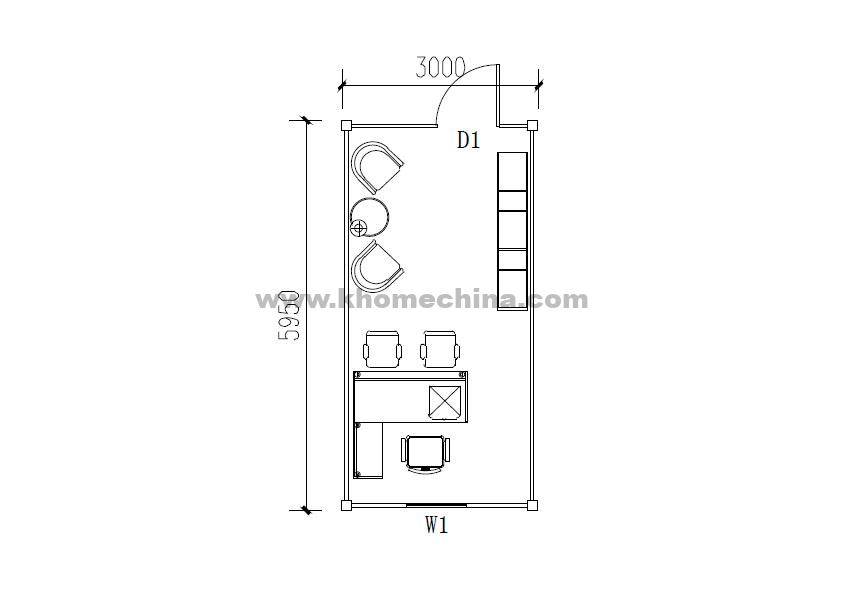
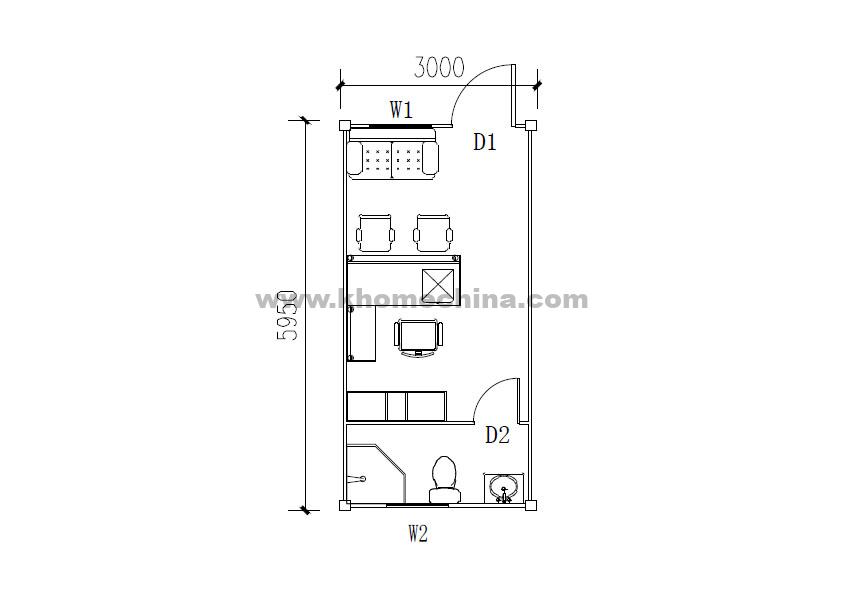
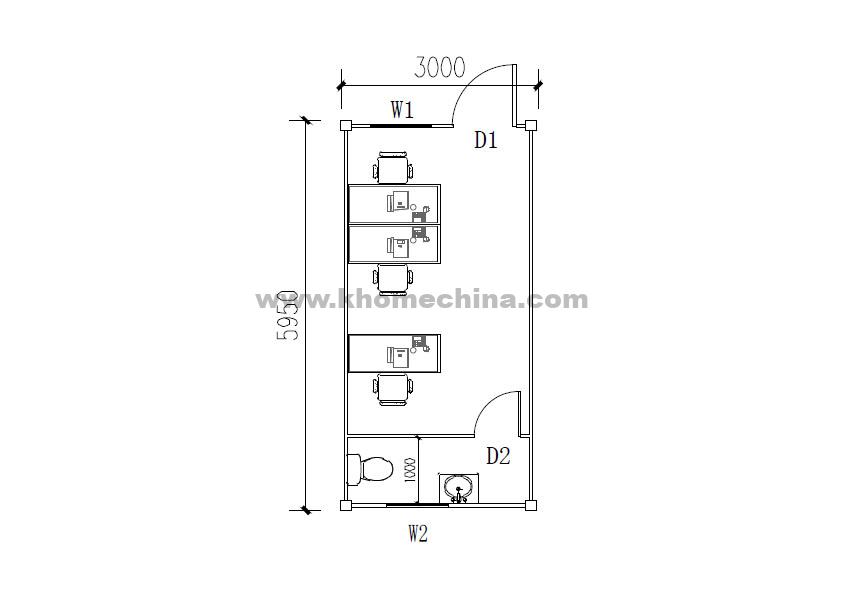
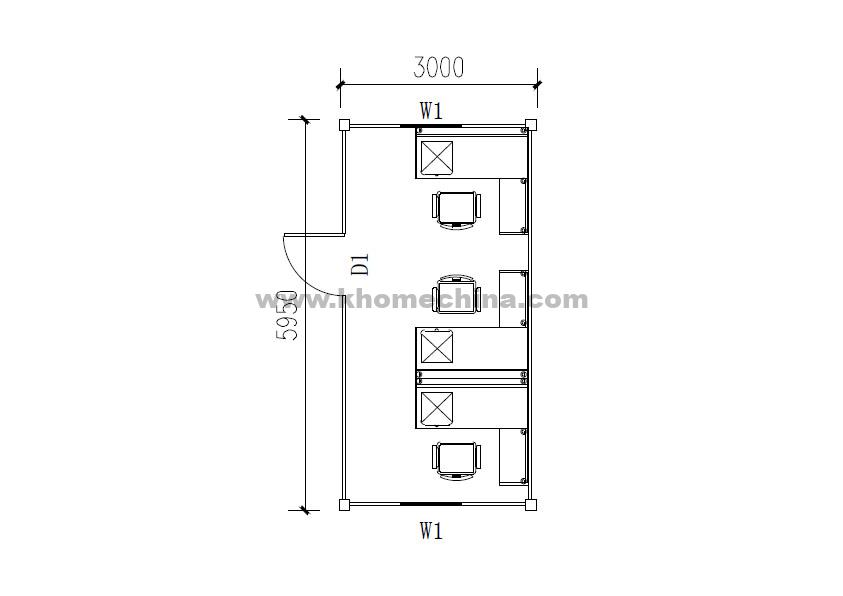
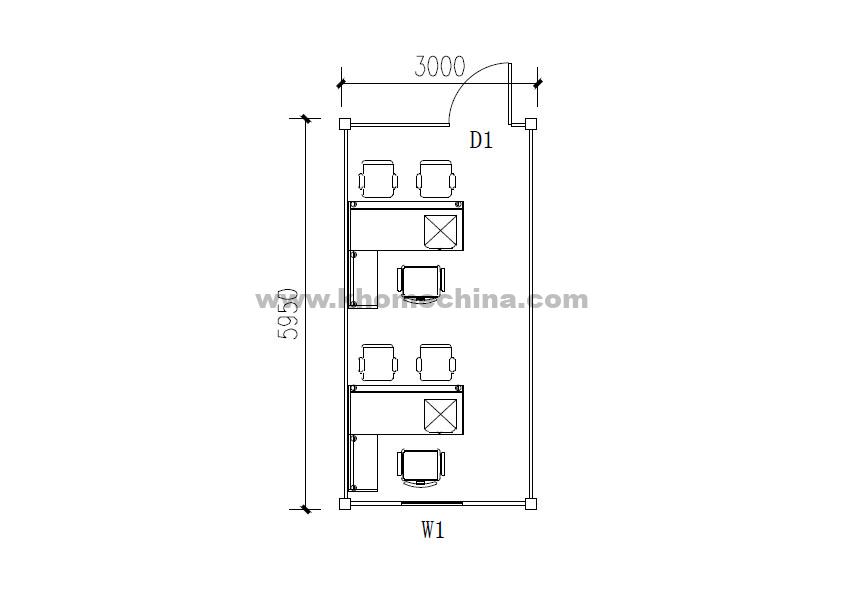
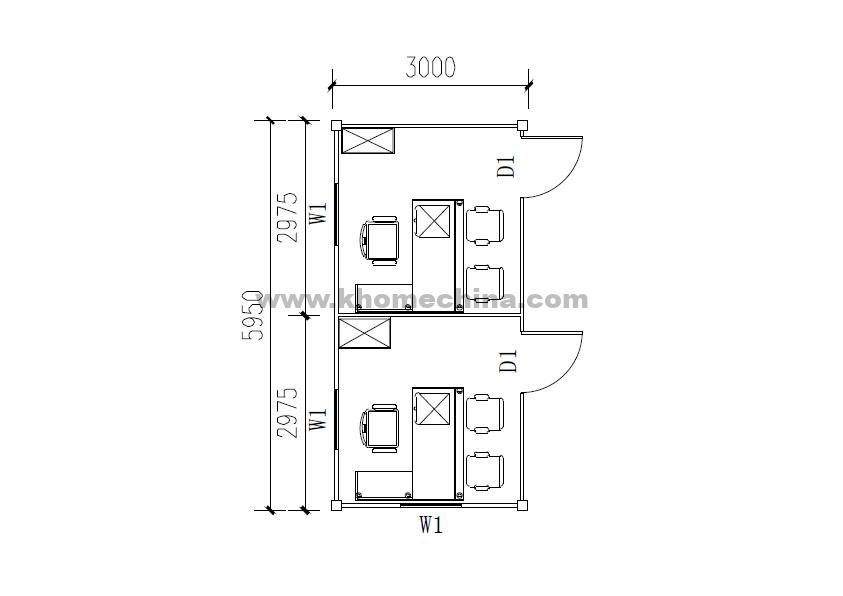
- Multi-Room Container Office Floor Plans: For medium to large-scale construction project teams, KHOME offers integrated container-style office spaces. These designs include project manager offices, shared staff offices, and amenities such as bathrooms and kitchens. The units are designed to maximize space utilization and meet daily work and rest needs.
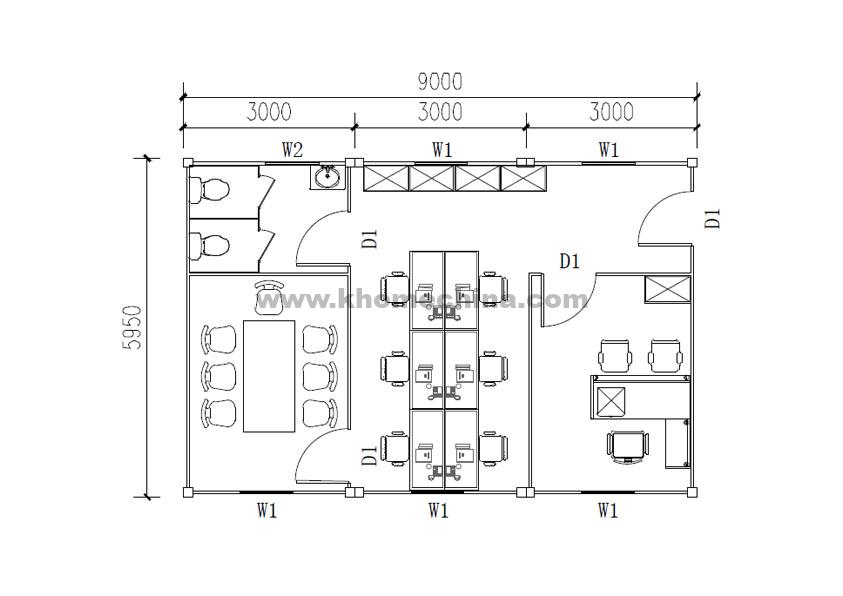
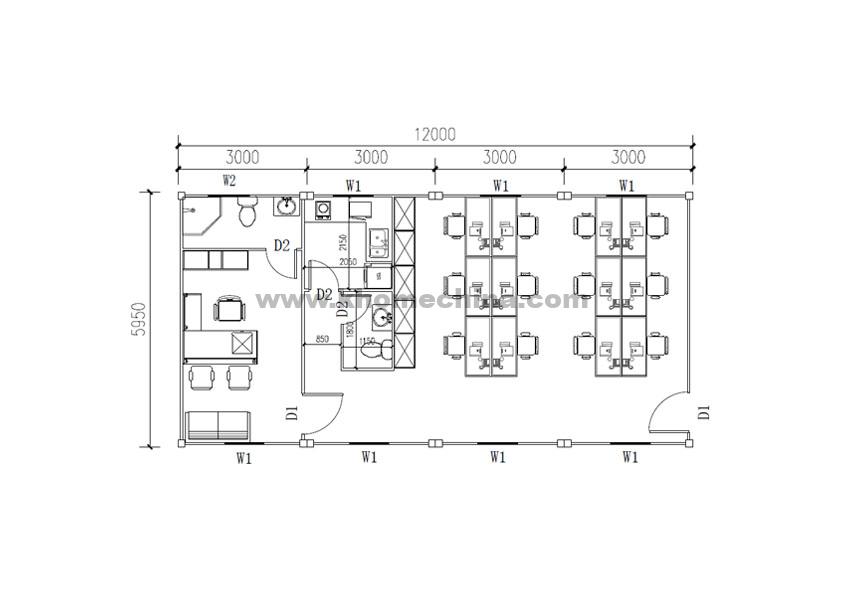
Why Filipino construction teams prefer container offices?
Rapid deployment: Installed in 4–6 hours by two technicians, so teams can start working immediately.
Weather-resistant: Steel construction withstands typhoons, heavy rain, and intense sun—critical for the Philippines’ unpredictable weather.
Customizable: Can be split into separate rooms (for private meetings or individual workstations) or expanded by combining multiple containers, adding flexibility.
Branded: Many companies paint their container offices with logos and contact information, boosting professionalism on-site.
Reusable: Moved to new projects after completion, making them a long-term investment.
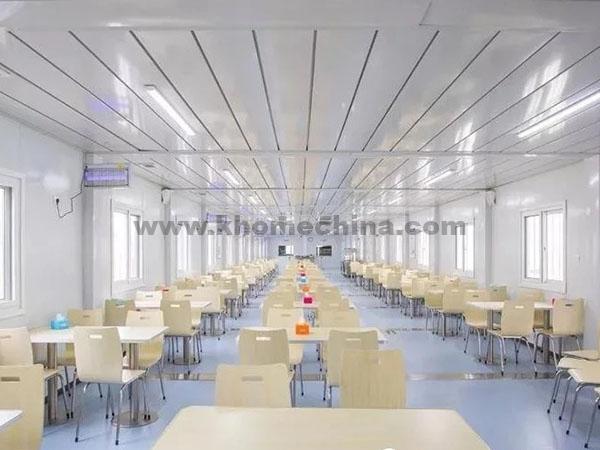
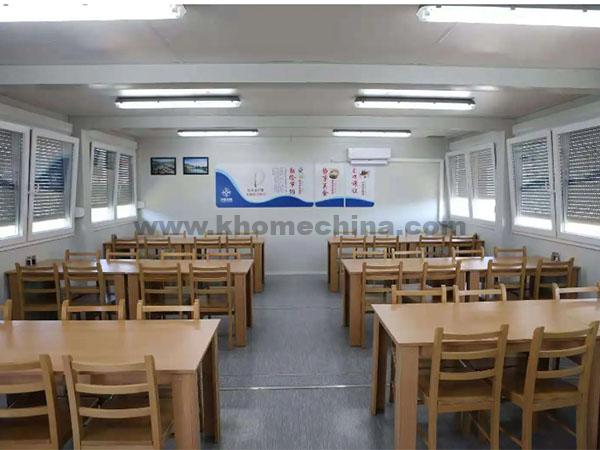
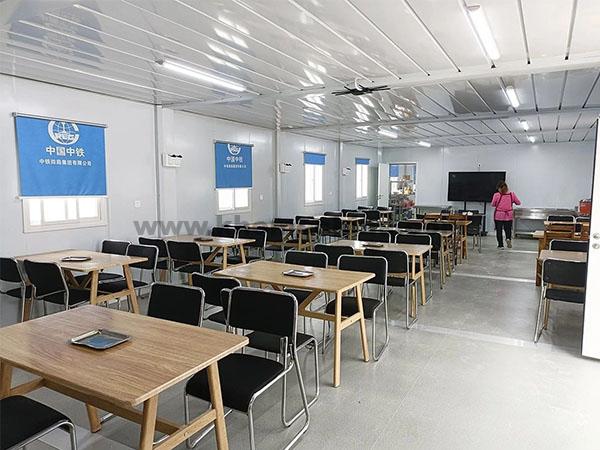
3. modular canteen & dining hall
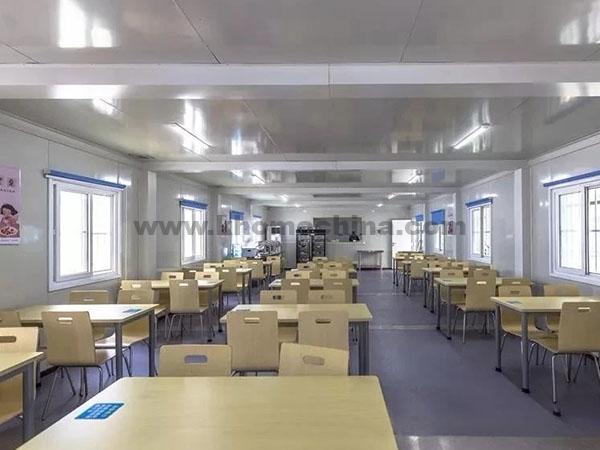
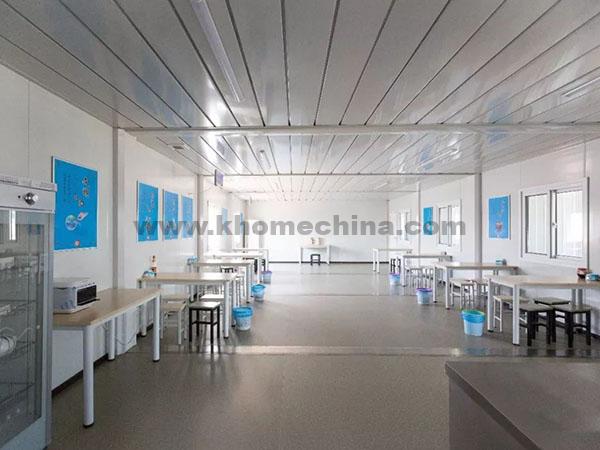
In construction project camps in the Philippines, container-style canteens are common supporting facilities, primarily used to provide daily dining space for employees. These canteens can be designed according to the actual number of diners to meet the needs of all personnel eating simultaneously, ensuring efficient and orderly operation of catering services.
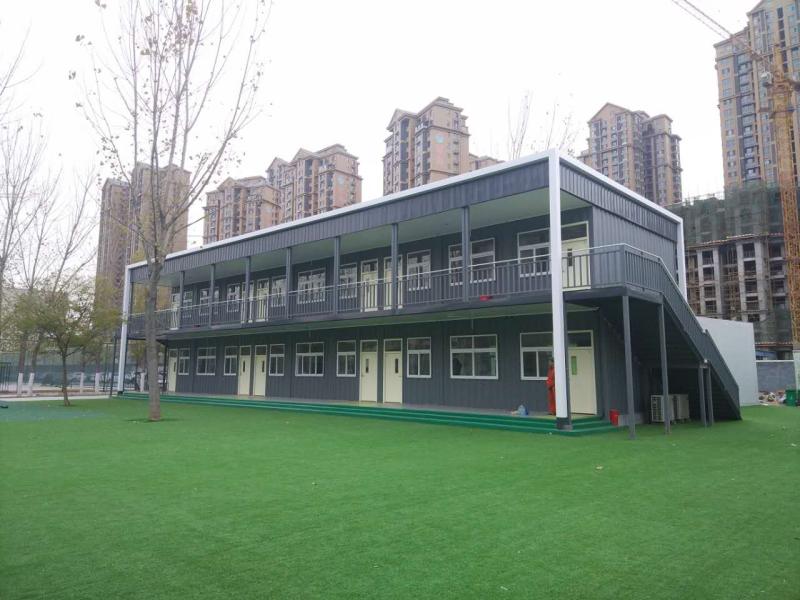
4. Temporary Schools & Classrooms
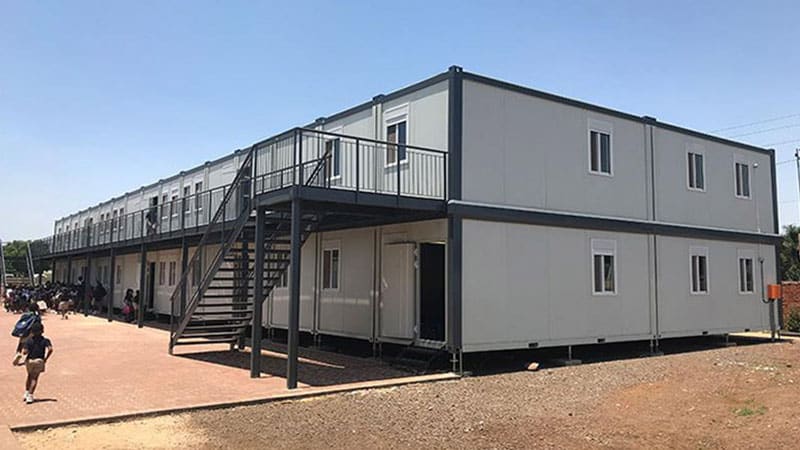
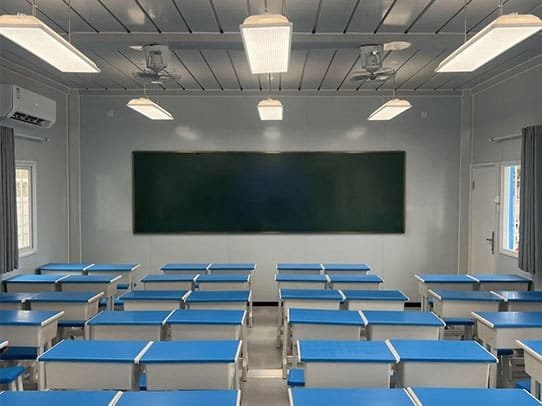
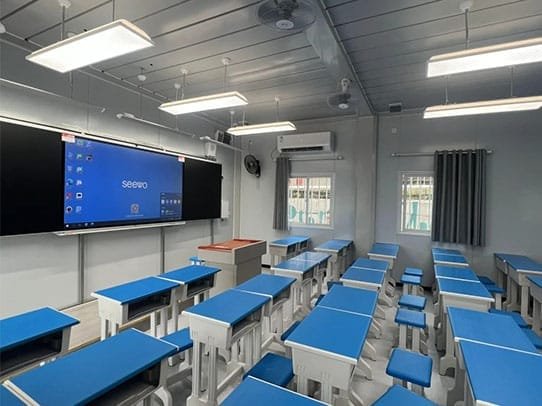
In the Philippines, where natural disasters (typhoons, floods, earthquakes) often damage schools, and rural areas lack permanent educational facilities, container van schools offer a low-cost solution for temporary educational spaces.
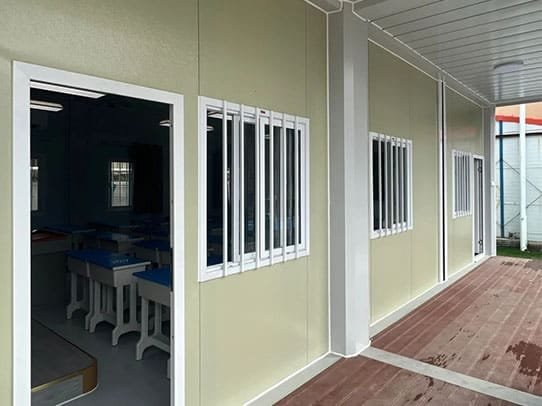
Local governments, NGOs, and educational institutions use converted container vans as temporary classrooms, ensuring that students can continue learning even when traditional schools are unavailable. They’re also used in remote provinces like Nueva Ecija, Palawan, and Mindanao, where building permanent schools is costly and time-consuming, making them play a vital role.
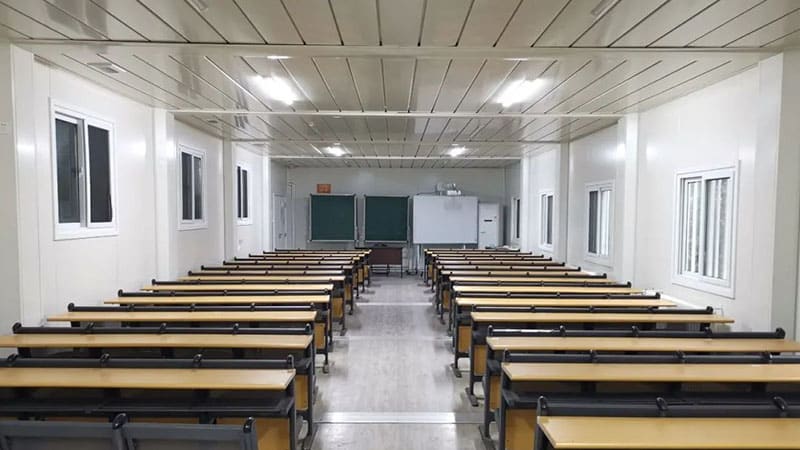
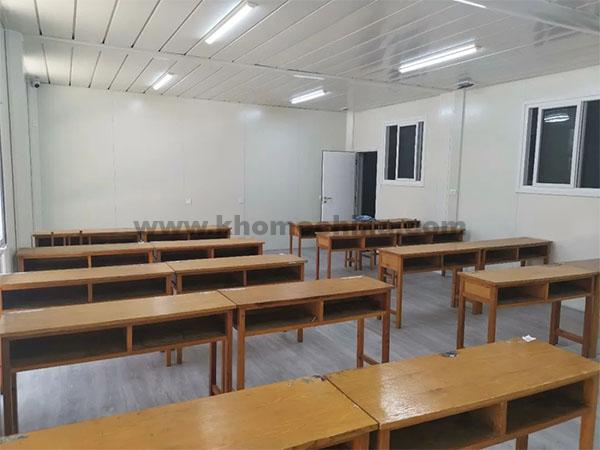
Container classrooms are typically 40ft vans, customized to fit 25–35 students. They include desks, chairs, whiteboards, lighting, fans, and insulation to keep students cool. Many also have windows for natural light and ventilation, and some are equipped with solar panels (ideal for areas with unstable electricity). For younger students, containers are often painted with bright colors and murals to create a welcoming environment, making this 5 Uses of a Container Van in the Philippines student-friendly.



Key benefits of building schools and classrooms in the Philippines
Fast setup: Temporary classrooms can be deployed in days, minimizing disruption to students’ education.
Affordable: 60–70% cheaper than building a permanent concrete classroom, making them accessible for cash-strapped local governments.
Durable: Withstand natural disasters, ensuring long-term use even in high-risk areas.
Flexible: Can be moved to different communities if needed, or converted into permanent classrooms with minor upgrades.
Functional: Equipped with all essential classroom tools, from whiteboards to storage cabinets for books and supplies.
5. Secure Storage Rooms – For Construction Materials, School Supplies & Community Goods
A versatile and widely used application among the 5 Uses of a Container Van in the Philippines is secure storage rooms. Whether for construction sites, schools, or local communities, container vans provide a lockable, weatherproof space to store valuable items—protecting them from theft, humidity, and damage. This is especially important in the Philippines, where monsoon rains, typhoons, and theft are common concerns.
For construction sites: Container storage rooms are used to store tools, cement, lumber, steel bars, and other materials. They prevent theft (a major issue on construction sites) and keep materials dry during rain, ensuring projects stay on schedule. Most construction companies use 20ft containers for storage, as they’re easy to place on-site and can be moved as the project progresses.
For schools: Container storage rooms hold textbooks, desks, chairs, sports equipment, and school supplies. This is especially useful for temporary schools or rural schools with limited space.
For communities: Local barangays and NGOs use container storage rooms to store relief goods (rice, canned food, blankets) for disaster response, or community equipment (sports gear, gardening tools). In Metro Manila, many barangays keep a 20ft container on standby for typhoon season, ensuring relief goods are ready to distribute quickly.

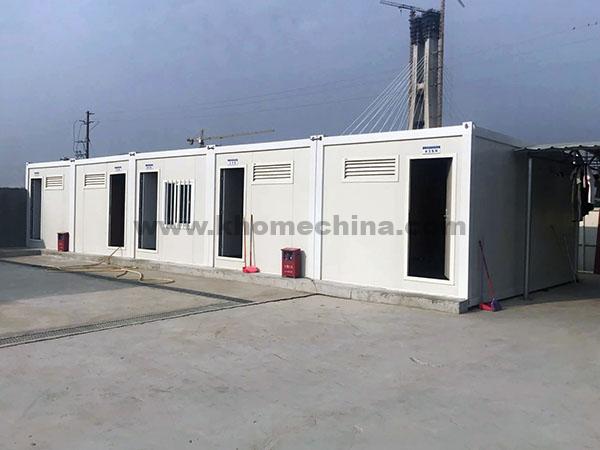
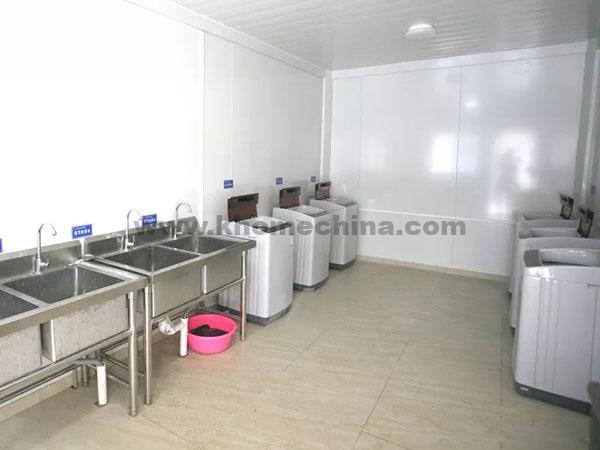
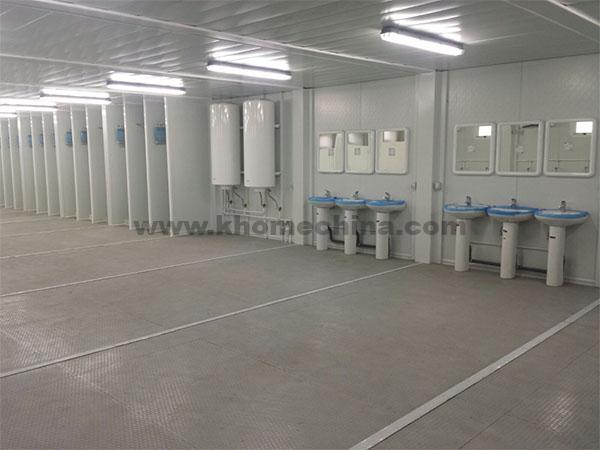
6. Combined Bathroom/Shower Facilities : Essential On-Site & Community Services
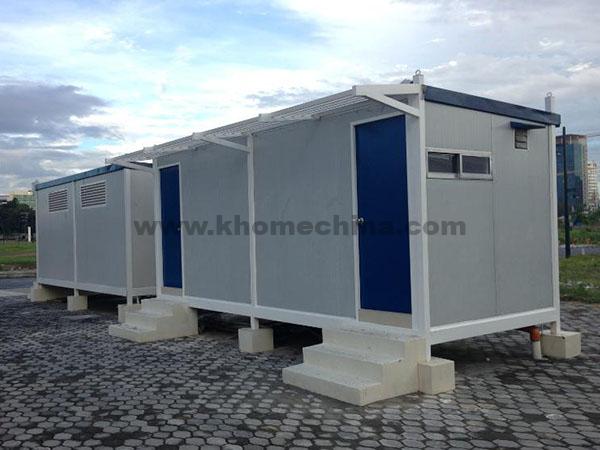
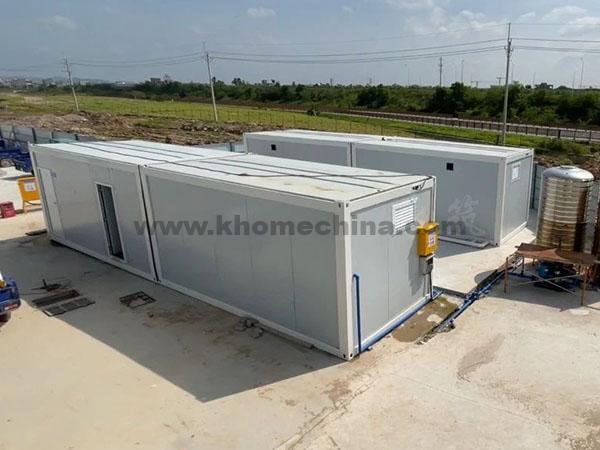
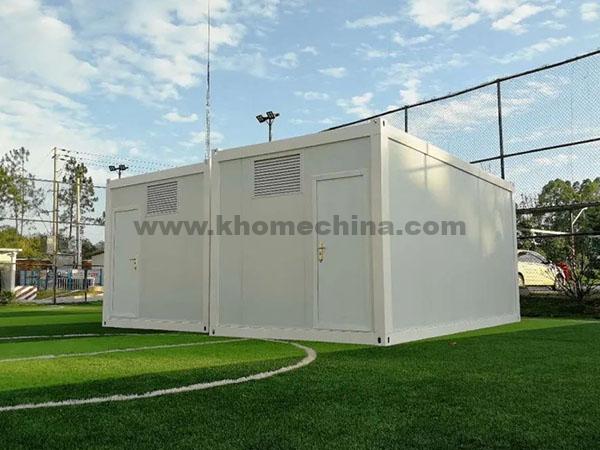
The fifth and final entry in the 5 Uses of a Container Van in the Philippines combines two critical needs: on-site bathroom/shower facilities (for construction workers, temporary school staff, or disaster survivors) .These converted containers provide essential services that are often lacking in remote or temporary settings, improving quality of life.
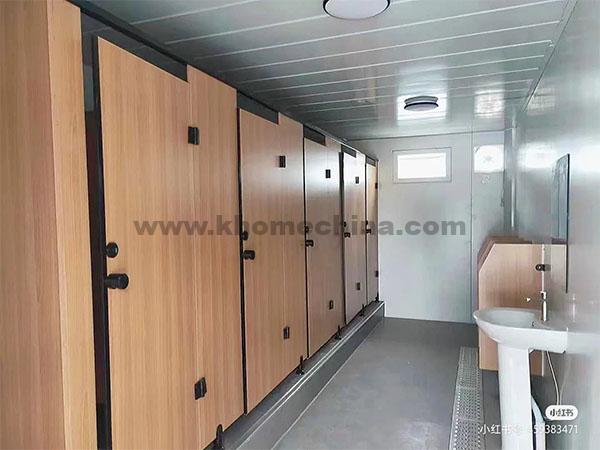
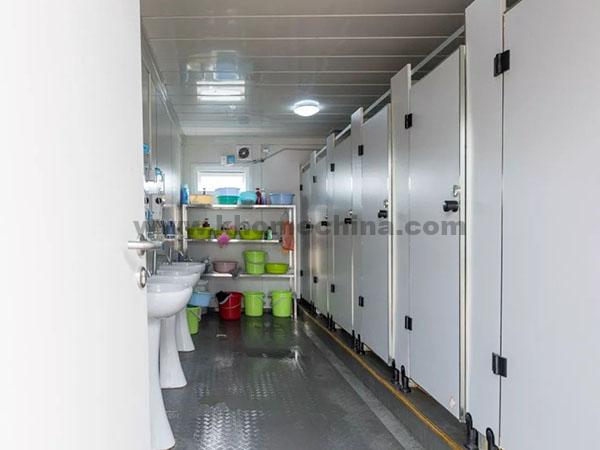
For construction sites with on-site workers, container bathrooms and showers are a must. They’re typically 20ft containers split into separate sections for men and women, with toilets, sinks, and shower stalls. These containers are equipped with water tanks, plumbing, and drainage systems: adapted to the Philippines’ water supply (many use rainwater collection systems for cost savings). They’re also insulated to provide privacy and keep interiors cool, making this a comfortable.
Key features: Water-saving fixtures (to reduce costs), ventilation fans (to prevent mold), and easy-to-clean surfaces (important for hygiene).
Many also include water heaters for cooler months, especially in mountainous areas like Baguio, enhancing the functionality.
Why Container Vans Are Perfect for the Philippines’ Needs?
1. Efficient Shipping & Logistics
- Standard shipment: 12 units per 40-foot container.
- Bulk order advantage: For orders exceeding 30 units, each 40-foot container can put 14 units or more, significantly reducing shipping costs.
2. All-Inclusive, Budget-Friendly Solution
- High-quality steel structure: hot-dip galvanized & painted for long-term rust resistance, Durable wall panels, PVC-carpeted floor, and weatherproof roof
- Regular Configuration: 2 windows, 1 door, and electrical wiring
- No hidden costs: everything is included for a seamless setup.
3. Superior Anti-Corrosion Protection
The entire steel framework undergoes hot-dip galvanization and multi-layer painting, ensuring decades of rust-free durability even in harsh environments.
4. Quick & Easy On-Site Assembly
- No heavy machinery required: all components are screwed together manually, eliminating the need for cranes or forklifts, which makes it the ideal housing solution for rural, suburban, or remote areas with limited infrastructure.
- Hassle-free installation: includes step-by-step assembly guides & video tutorials
5. Space-Saving & Multi-Story Design
- Stackable up to 3 floors: optimizing land use and reducing foundation costs.
6. Flexible Sizing Options
- Standard dimensions: 3m (W) × 5.95m (L) × 2.8m (H)
- Customizable sizes available: or as per requirements.
7. Weather-Resistant Roof System
- Efficient drainage design: with 4 PVC pipes (installed at each corner) to prevent water accumulation.
- Optional roof styles: Flat, pitched, or sloped roof configurations available.
Recommended reading
flat pack containers Prices & Cost Analysis Guide
Detachable Container House Prices & Cost Analysis Guide
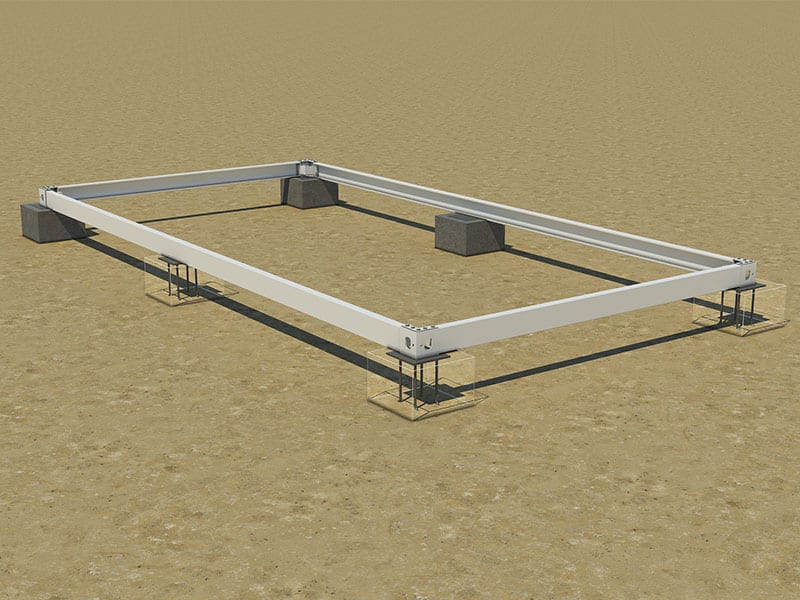
How to anchor a prefabricated house to the foundation
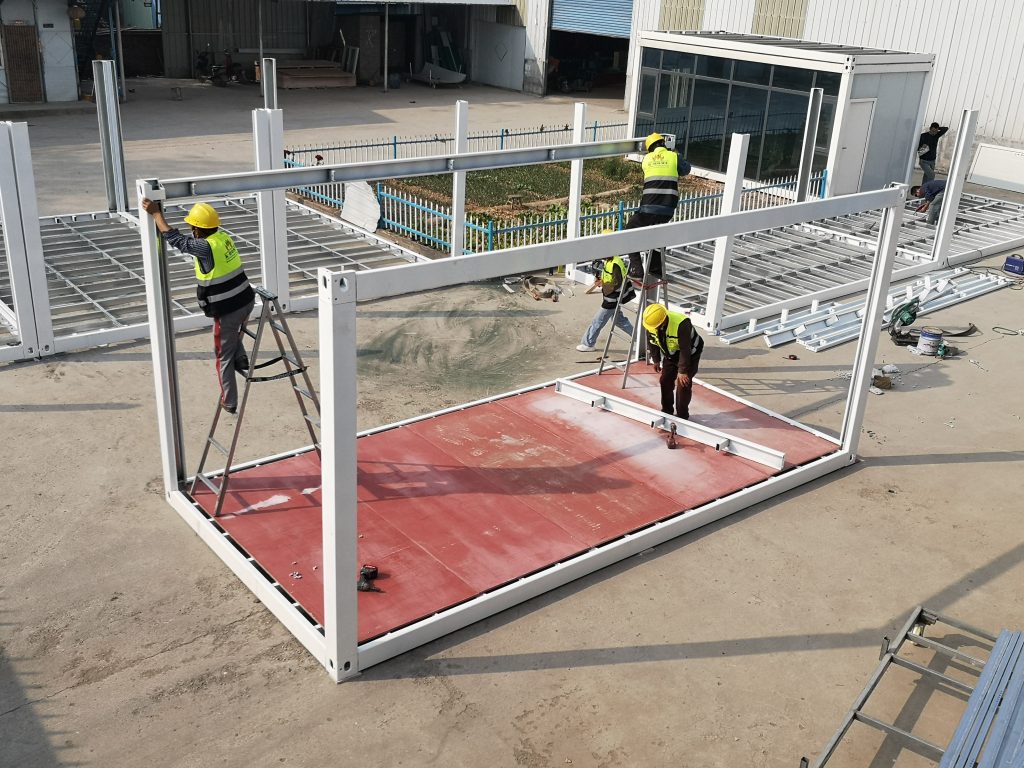
How to Build a Container House: A Complete Guide
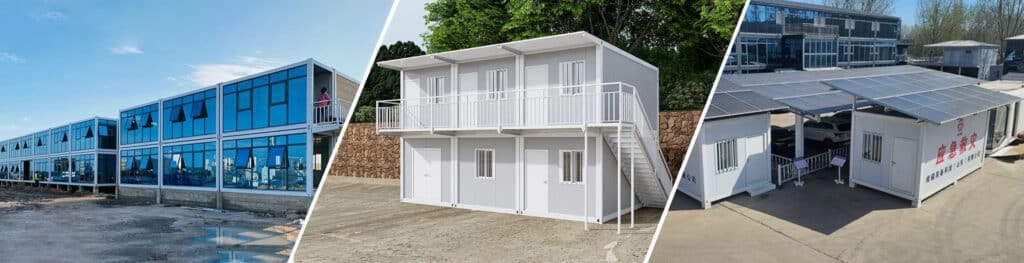
Detachable Containers VS Flat Pack Containers
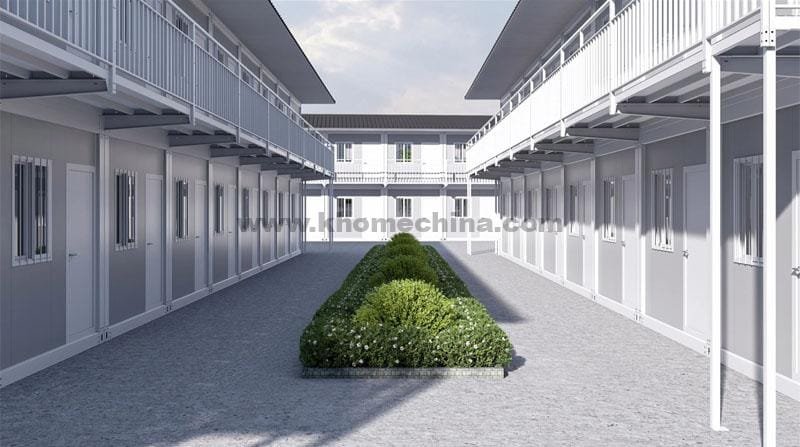
10 Reasons You Need Site welfare Cabins On Construction sites
SEND A MESSAGE