
Can prefab container houses resist a typhoon?
In the Caribbean, Southeast Asia, and parts of Africa, this is an important concern for buyers. Since strong winds and hurricanes often happen in these areas.
At K-HOME, our answer is Yes. Prefab container houses can fully ensure their structural integrity and safety during typhoons. We are so confident because of the following three key factors.
- The structure’s ability to handle strong winds
- How the house is anchored to the ground
- Real-world performance in extreme weather(Real Case Studies)
In this article, we’ll walk through these points. By the end, you’ll see that prefab containers are no longer just temporary shelters. They are reliable engineered structures withstanding harsh weather conditions.
Typhoon Resistance Performance: Structure, Anchoring, and Real-world
1. Structural Wind Resistance:
The wind resistance of our prefabricated container homes is by no means a mere conjecture; rather, it stems from robust design and rigorous engineering expertise.
Take our standard 3m x 6m detachable unit as an example. Its structural calculation shows that the design meets several recognized building codes. It includes standards for steel structures and load calculations.
Most notably, the standard units meet essential structural load requirements, with wind pressure resistance up to 0.45 kN/㎡. This level of wind resistance is roughly equivalent to a Category 10 typhoon.
This wind resistance comes from a carefully designed steel frame system.
Our container houses are built with high-strength, cold-formed steel. This includes reinforced corner joints, main beams, and roof and floor structures. The walls use 50 mm-thick rock wool sandwich panels. These provide both insulation and structural strength. The entire system forms a steel box-like structure. The whole unit disperses wind loads. Thereby preventing stress from concentrating at the structure’s weak points.
More importantly, structural analysis results: under various combinations of wind loads, the maximum stress experienced by the building remains far below the 235 MPa yield strength of its steel components.
It means that under extreme conditions, the structure will not reach its point of failure. Thereby consistently maintaining an ample margin of safety.
Based on this safety reserve, the prefabricated container houses remain intact and undamaged during typhoon strikes. It provides clients in high-risk regions with a solid guarantee of confidence.
2. Ensuring Stability: How Installation Makes the Difference
The structural strength is certainly important. But, during typhoons, the anchored method is also important. Strong winds not only push against the structure but also generate uplift forces. It causes poorly secured structures to be lifted off the ground or overturned. Therefore, proper installation is equally critical to ensuring safety.
One of the most effective ways to ensure stability is to use embedded parts. (This is our most recommended way). When building a concrete foundation, embedded parts are embedded in advance. After the house is assembled, the corners of the container house and the embedded parts are welded together. This creates a strong connection between the structure and the ground. It significantly increases its resistance to lifting and lateral forces.
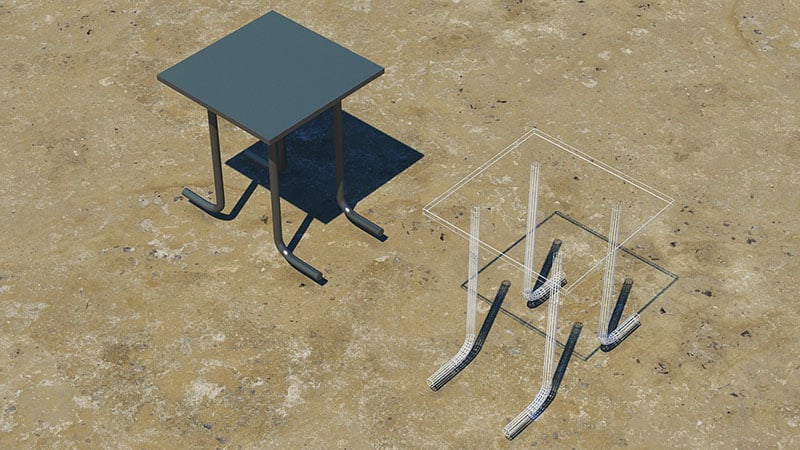
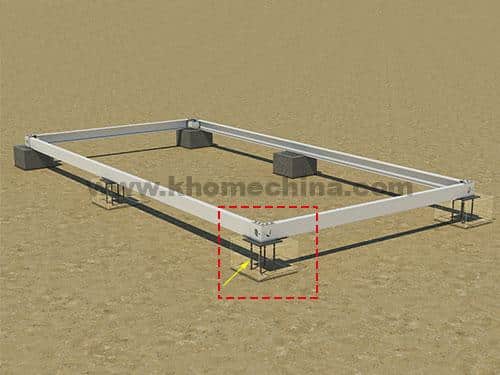
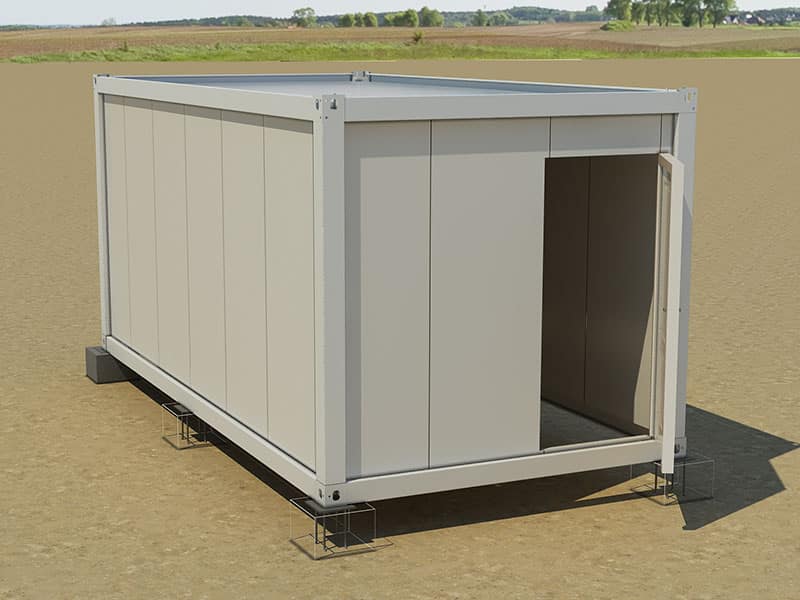
In addition to embedded parts, anchor bolts are widely used. These bolts connect the bottom frame directly to the concrete foundation. It prevents any movement caused by strong winds. This method is both reliable and practical, offering long-term stability with relatively simple installation. (During installation, the bottom frame needs to be aligned with the reserved holes of the anchor bolts).
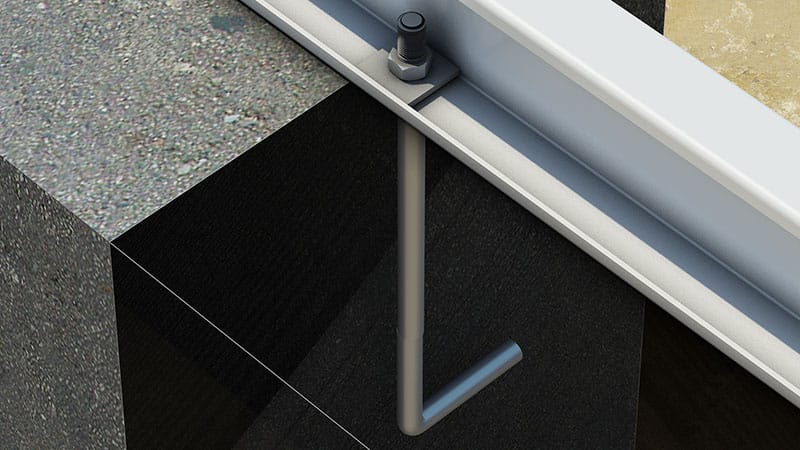
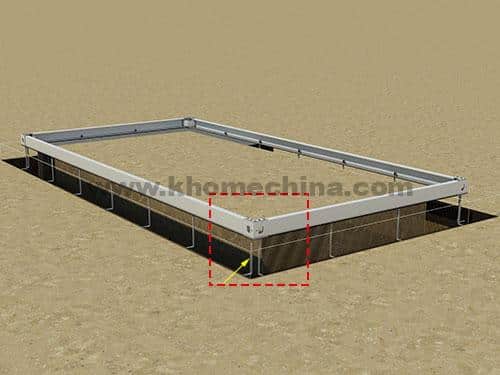
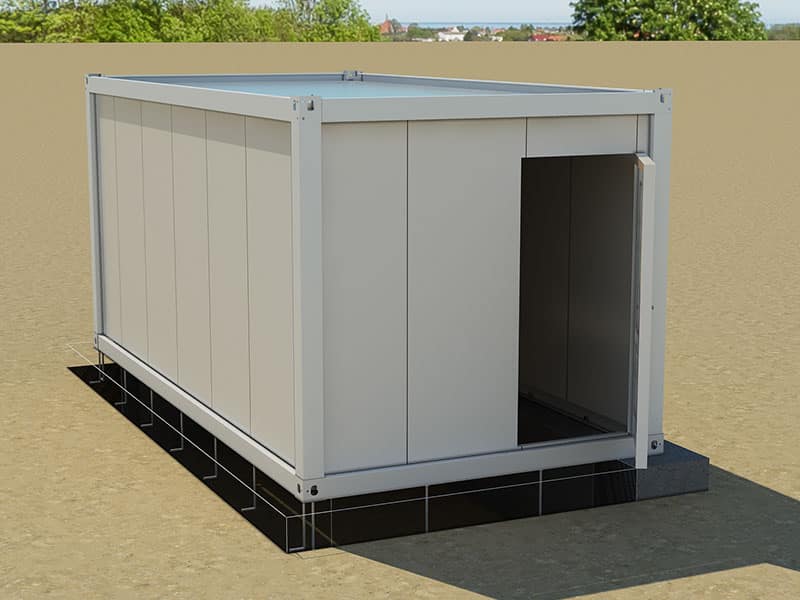
The type and quality of the foundation also play a vital role. Depending on the site conditions, different foundations such as strip foundations, independent footings, or raft slabs can be used. A well-designed foundation ensures that loads are evenly distributed. And the wind forces are safely transferred into the ground, reducing the risk of structural deformation or failure.


Furthermore, when multiple container units are combined into a larger building, the overall stability increases. The connections between the modules establish a complete structural system. This not only increases the overall mass but also bolsters wind resistance. The modular connection not only improves the building’s functionality but also strengthens its capacity to withstand extreme weather conditions.
3. A Real-World Case Study: The Jamaica Project Post-Hurricane
Real-world performance is the most powerful evidence. A recent project in Jamaica serves as a strong example of how prefab container houses perform during extreme weather. This project, completed in July 2024, consists of 11 standard detachable container house units. It is used as office and accommodation spaces.
The construction process followed: installation of embedded parts → steel frame → structural assembly → wall and roof installation → interior finishing. Each stage was carefully executed to ensure structural integrity and quality.
After finishing, the project experienced a powerful hurricane. The surrounding environment was heavily affected, with trees knocked down and visible signs of severe wind damage across the area. Despite these harsh conditions, the container houses remained stable and intact, showing no signs of structural failure or displacement.
Below are videos and images provided by our clients.


This performance outcome was not accidental.
The strong steel frame provided excellent resistance against wind pressure. At the same time, embedded parts anchoring ensured the containers were firmly fixed to the ground. The modular design, combining multiple units, further enhanced the overall stability by increasing weight and structural continuity.
This case demonstrates a critical point: prefab container houses are not fragile or temporary solutions. When well designed and installed, they can withstand real typhoon conditions. They can perform reliably even when surrounding structures or natural elements are severely damaged.
Conclusion: A Reliable Container Housing Solution for Typhoon-Weather Regions
After years of development, prefabricated container homes are no longer just temporary shelters. Today, they are well-engineered structures. They are built to resist typhoons. They are stable and meet building codes.
To protect your investment from natural disasters, be sure to pay attention to the following:
- Check structural strength with your supplier.
Ask if the modular container structure is suitable for your local wind zone and environmental conditions. - Ensure proper installation.
Professional assembly and correct anchoring are essential for long-term stability. - Look for proven case studies.
Make sure the supplier has completed real projects in typhoon-prone areas. These structures must remain safe and stable after extreme weather events. - Trust manufacturer reputation.
A professional and trustworthy manufacturer is the key to solving any problem. They will provide building solutions that meet local standards.
At the same time, they will also take responsibility when issues arise.
latest Articles
Detachable vs Flat Pack vs Folding container house
Prefab K House vs. Prefab T House: Buying Guide
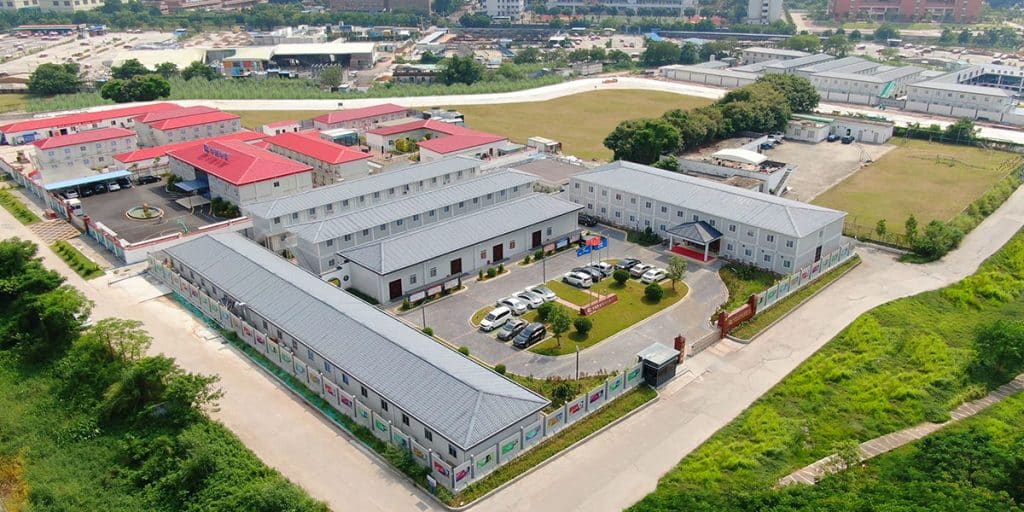
Temporary Construction Facilities: How to Plan a Modular Site Setup
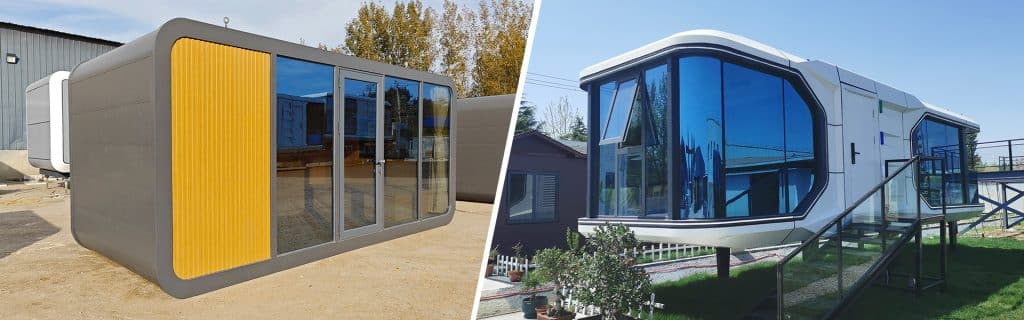
A guide on capsule houses: how to choose?
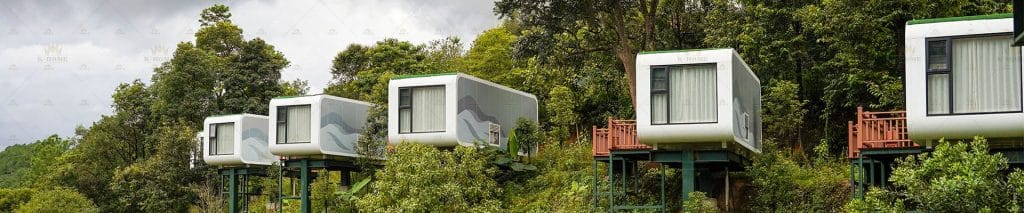
Manufacturing Process of K-HOME Apple Capsule
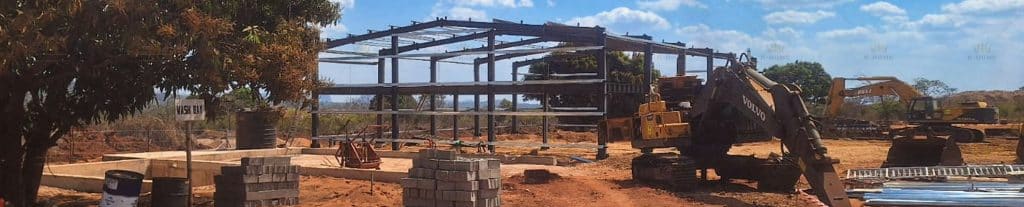
Steel Structure Warehouse In Africa
contact us
Call us now
+86 373 2511966
Adress
Xiaodian Industrial Park, Xinxiang City, Henan Province, China
Websites
Request a Quote
For a quick quote, please fill out the Inquiry Form. Our sales team will contact you as soon as possible.